
Does more ply mean better toilet paper?
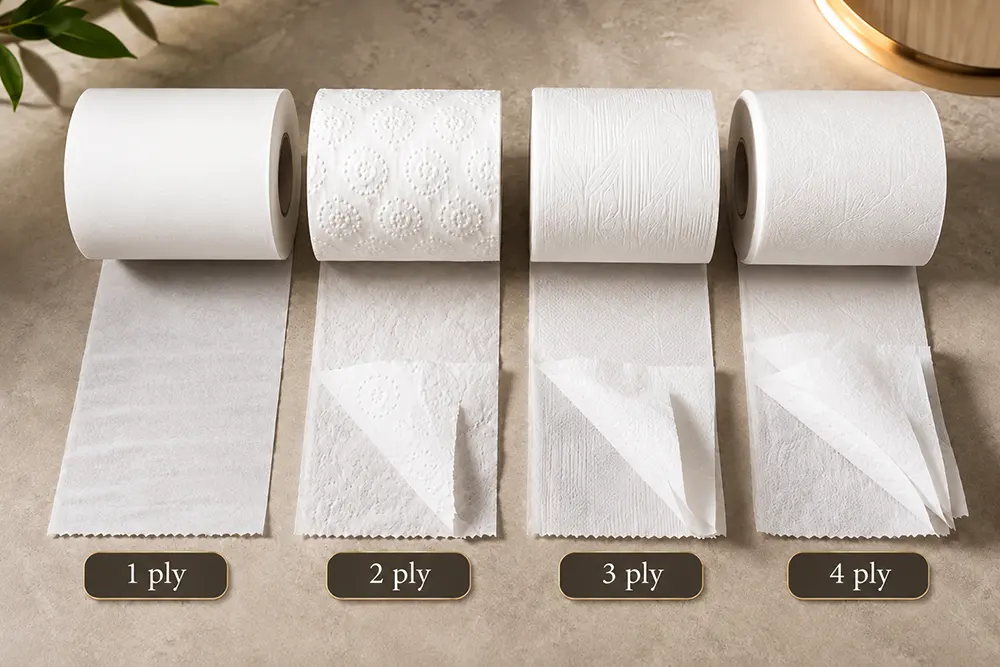
Table of Contents
Does more ply mean better toilet paper? Not necessarily. The number of plies affects thickness, softness, and absorbency, but in practice, quality depends on basis weight, fiber quality, and the way the paper is processed, not on the number of plies alone. A well-made 2-ply paper can outperform a poorly made 3-ply product.
According to Reel Paper, a toilet paper manufacturer that provides educational content about tissue product properties, people generally assume that more plies mean better-quality paper, but do not be misled, this is not always the case.
To learn which types of toilet paper are available for professional use and how to choose the right one, read our blog: Professional toilet paper for commercial facilities: The perfect balance of a gentle touch, superior cleanliness, and optimal savings
What do plies actually change in toilet paper?
The number of plies affects the structure and overall thickness of toilet paper and can also contribute to a softer feel and greater absorbency. However, 3-ply paper is not automatically softer, more absorbent, or higher in quality than 2-ply paper because basis weight, fiber type, embossing, and the way the plies are bonded also affect the final properties.
Which factors actually determine toilet paper quality?
The quality of toilet paper depends on a combination of basis weight, fiber type and quality, softness, absorbency, strength during use, and finishing processes such as embossing and perforation. The way the paper behaves after use, particularly its ability to disintegrate in water, also matters. The number of plies is therefore only one indicator of a product’s properties.
Is 1-ply toilet paper always a worse choice for commercial facilities?
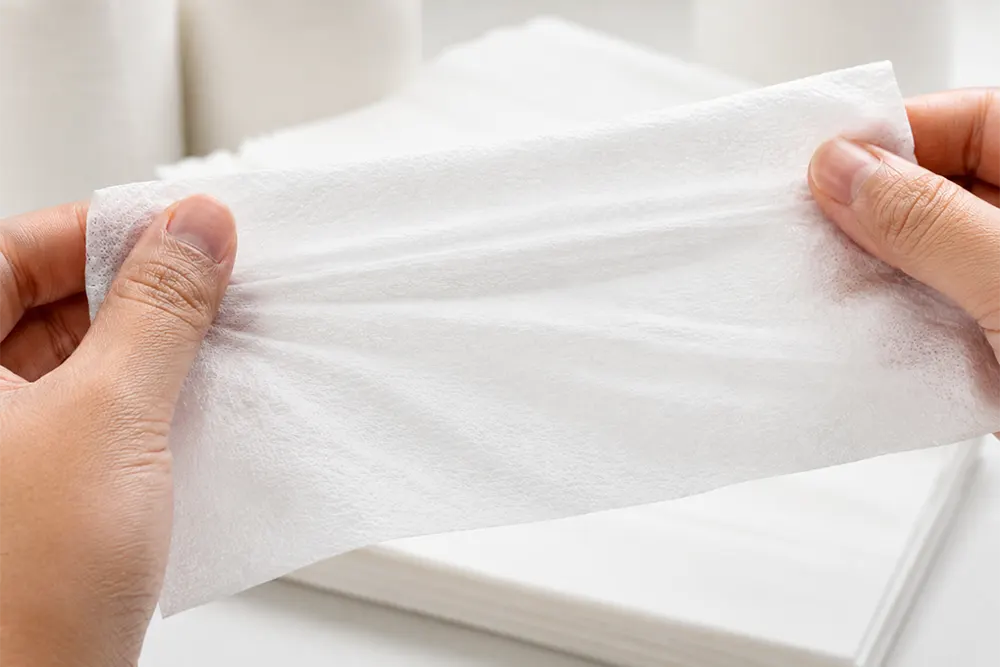
No. 1-ply paper can be a practical and economical choice for facilities with high usage frequency. However, the number of plies alone does not determine how quickly the paper will disintegrate in water. Basis weight, thickness, fiber structure, additives, and the manufacturing process also affect its behavior.
How can you recognize high-quality toilet paper without relying on the number of plies?
When choosing a product, pay attention to basis weight, softness, structural consistency, perforation quality, and the way the paper unwinds, as well as its ability to disintegrate in water after use. The right product should balance comfort, practicality, and the specific requirements of the commercial facility.
Recommended products for reliable quality
Table: choosing by facility type
| Facility type | What matters more than the number of plies | What to consider when choosing |
| Offices | Balance between comfort and consumption | Basis weight, softness, roll format, and dispenser compatibility |
| Restaurants and hotels | User experience and comfort | Fiber quality, texture, softness, and smooth unwinding |
| Shopping centers and high-traffic restrooms | Controlled consumption and paper availability | Roll/dispenser capacity, refill frequency, and dispensing method |
| Healthcare facilities | Reliable system performance | Suitable format, controlled dispensing, and consistent availability |
| Manufacturing and logistics facilities | Practicality and cost-effectiveness | Capacity, basis weight, and the ratio between quantity and consumption |
Does more ply mean better toilet paper- FAQ?
Does a higher number of plies always mean a higher price?
Usually yes,producing additional plies increases raw material and processing costs, so the number of plies often correlates with price, although this does not guarantee a proportionally higher level of quality.
Does the number of plies affect how much toilet paper people use each time?
Yes, indirectly. Users often use larger amounts of thinner, 1-ply paper to achieve the same effect, while thicker paper can reduce the number of sheets used each time, but this also depends on basis weight, not only on the number of plies.
How does basis weight affect the perception of quality compared with the number of plies?
Basis weight indicates the mass of paper per unit area and provides important information when comparing products, but it does not determine quality on its own. Fiber type, fiber structure, processing methods, and final production processes also affect strength, softness, and absorbency.
Does the number of plies affect the choice of toilet paper dispenser?
It can, but the number of plies is not the main criterion. When choosing a dispenser, the paper format, roll or sheet dimensions, and system capacity matter more. You should therefore check paper and dispenser compatibility according to their specifications, especially in commercial facilities with high usage frequency.
More plies do not always mean higher quality. The right choice is paper that suits the space, usage patterns, and expected level of comfort. Choose toilet paper that makes sense for your facility.
About the author:
Milja Tonić – SEO Content Strategist & Copywriter
Milja Tonić is an SEO Content Strategist and Copywriter at LUU.
She specializes in creating expert content in the fields of professional hygiene, paper products, dispensers, and facility management.
The expert articles on this blog result from detailed research, an analytical approach, and editorial work by the author, while applying current SEO standards and best practices for Google Search and AI search (SGE/AI Overview).
Subscribe to the LUU newsletter and stay up to date with the latest offers.