
Table of Contents
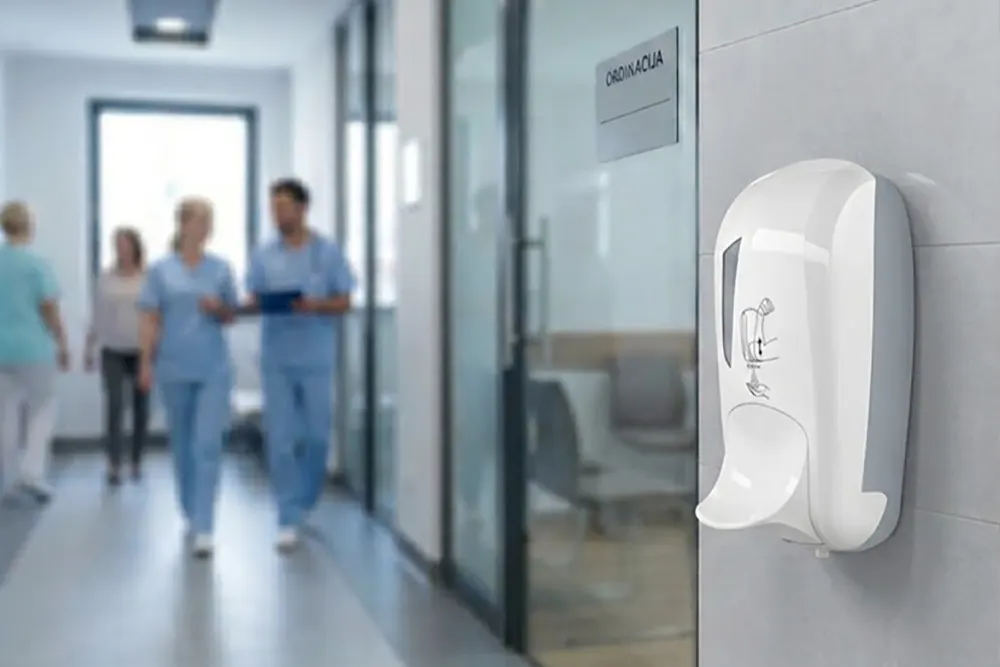
In hospitals and clinics where hand hygiene is the first line of defense, equipment selection becomes an act of patient care. The right Hand sanitizer dispenser for hospitals transforms a medical space into a zone of uncompromising safety without unnecessary movements. Premium standards require systems that operate silently and reliably. Absolute stability is achieved through intelligent design that inspires trust.
The selection of a Hand sanitizer dispenser for hospitals is based on a combination of hygiene standards, technical characteristics, and consumption control in conditions of intensive use.
If you also want to learn how patients and doctors in your healthcare facility can be certain that all hygiene standards are at the highest level and that the risk of infections is minimized, read our blog: Dispensers and paper products in healthcare: Hygiene standards, infection control and savings without compromise.
What is a Hand sanitizer dispenser for hospitals?
A Hand sanitizer dispenser for hospitals is a device that enables calibrated, hygienic, and standardized dosing of disinfectant in healthcare facilities, thereby effectively contributing to reducing the risk of infections and maintaining high sanitary standards.
In a hospital environment, every contact carries a risk.
Therefore, a dispenser is not an accessory but part of the system.
Why is choosing a dispenser important for infection control?
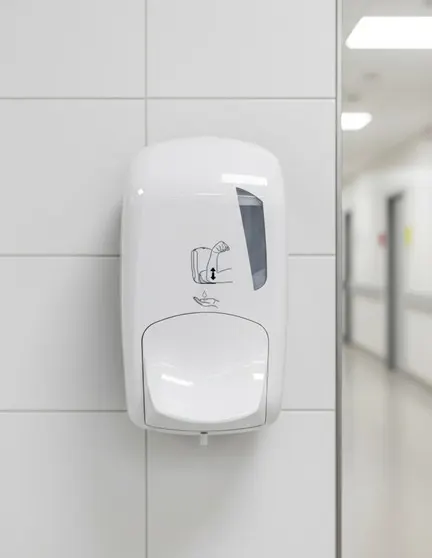
The choice of a dispenser directly affects the level of hand hygiene and the prevention of the spread of pathogens and viruses, as it enables consistent application of disinfectants at critical locations in healthcare facilities where frequent contact occurs between users, as well as between users and contact devices or surfaces where the highest number of pathogens is retained. An inadequate hospital dispenser leads to improper use, increased contamination, and interruptions in the hygiene chain, which is unacceptable in places such as hospitals.
What defines a premium hand sanitizer dispenser?
Premium hand sanitizer dispenser is defined by three key parameters:
- touchless activation (elbow mechanism or sensor)
- medical-grade materials resistant to corrosion
- dosing precision
In healthcare facilities, the premium standard подразумева systems that:
- eliminate cross-contamination
- feature hermetically sealed reservoirs to preserve solution sterility
- enable visual control of liquid levels at all times
The implementation of touchless systems aligns with global WHO hand hygiene standards. These protocols confirm that adequate availability of disinfectants directly reduces the rate of hospital-acquired infections.
Which LUU solutions best support workflows in hospitals?
LUU dispensers with an elbow lever are designed to provide maximum hygiene through a mechanism that eliminates the habit of using palms. With a capacity of 1.1l and precise dosing of 0.65ml, these dispensers allow doctors to focus on the patient while technology ensures safety.
- LUU soap dispenser for hospitals: Specially adapted for areas where sterility is imperative. Its elbow lever enables fluid motion without the risk of contamination. The locking system is click-based or key-locked.
- LUU disinfectant dispenser: An ideal solution for corridors and examination rooms that require fast and precise disinfection with liquid alcohol-based solutions.
Key advantages of the LUU system in numbers:
The following table shows how key features of the LUU system directly affect the efficiency and safety of a healthcare facility:
| Feature | Benefit for polyclinic |
| Elbow system | 0% risk of pathogen transmission by touch. |
| Capacity 1.1l | Noticeably less frequent refilling and time savings for staff. |
| Dosing 0.65ml | Up to 27% lower consumption compared to conventional valves. |
| Alcohol base | Compatibility with all medical disinfectants. |
Which technical characteristics make the difference?
Technical characteristics that make a difference in a Hand sanitizer dispenser for hospitals determine the level of hygienic safety, consumption control, and system reliability under continuous use conditions, which is why the selection must be based on performance rather than design.
Crucial technical characteristics of a dispenser affect its long-term functionality and compliance with hospital standards. The focus is not on aesthetics but on stability in everyday operation.
Pay attention to:
- Reservoir capacity: enables less frequent refilling and operational continuity
- Dosing type: ensures a consistent amount per user
- Material: guarantees resistance to chemicals and frequent cleaning
- Locking system: protects against misuse and external contamination
- Compatibility: enables the use of different forms of solutions (gel, liquid, foam)
How do Hand sanitizer dispensers for hospitals optimize the budget?
Smart LUU hand sanitizer dispensers for healthcare facilities directly reduce operating costs by up to 27% through precisely calibrated dosing of 0.7 ml to 1 ml per cycle. This standardization eliminates waste, prevents liquid leakage onto floors, and enables predictable budget planning.
Controlled consumption reduces unnecessary costs and facilitates inventory management. At the same time, fewer refills relieve staff and reduce operational pressure in everyday work. The result is a stable system where costs are transparent and hygiene standards are consistently maintained without deviation.
Key budget benefits:
- Calibrated delivery: A fixed dose prevents unnecessary material consumption
- Reduced waste: Hermetic systems preserve resources and floor cleanliness
- Predictable planning: Standardized consumption enables precise procurement
- Operational efficiency: Visual indicators shorten device servicing time
Hand sanitizer dispenser for hospitals – Experience from practice:
During the equipping of the premises of the dental clinic Prosmile from Novi Sad, the priority was to improve the functionality of bathroom equipment while ensuring it aesthetically fits into the clinic’s interior. Installed duo foam soap and paper towel dispensers, duo toilet brush and toilet paper units as well as waste bins have proven in practice to be an ideal solution for the clinic. The result is a space that inspires patient confidence while allowing staff to maintain hygiene flawlessly without unnecessary steps. This confirms that details often taken for granted are actually the essence of top-level service.
Hand sanitizer dispenser for hospitals – FAQ
How often should a dispenser be refilled in a hospital? Refilling frequency depends on usage, but the standard is daily monitoring and timely refilling to avoid interruptions in disinfectant availability.
Are automatic dispensers more reliable?
Yes, because they eliminate the human factor in dosing and reduce contact, making them more reliable in defined hygiene systems.
What is the optimal dispenser capacity?
Optimal capacity depends on location, but in hospitals, larger reservoirs are recommended to reduce the need for frequent refilling.
Does the dispenser material matter?
Yes. The material is crucial for system durability. It must be resistant to disinfectants and frequent cleaning to maintain longevity and hygienic integrity.
Top-level hygiene is an investment in the stability of your healthcare system.
Contact us for a personalized analysis of your space and advice.
Subscribe to the LUU newsletter and stay up to date with the latest offers.