
Table of Contents
How to choose hospital equipment today is crucial for the safety of the healthcare system. The focus should be on materials resistant to contamination, contactless technologies, and long-term hygienic stability of the space. According to the recommendations of the World Health Organization, the strategy for infection prevention begins with the selection of functional and high-quality medical equipment.
Proper hand hygiene represents one of the key factors in preventing hospital infections and reducing intrahospital transmission of microorganisms.
In operational practice, this implies the following:
• Every contact surface can become a potential carrier of pathogens
• Reducing unnecessary contact directly impacts contamination control
• The quality of materials affects not only hygienic safety but also long-term maintenance costs
The difference between a “clean” and a clinically safe space lies in the quality of medical equipment.
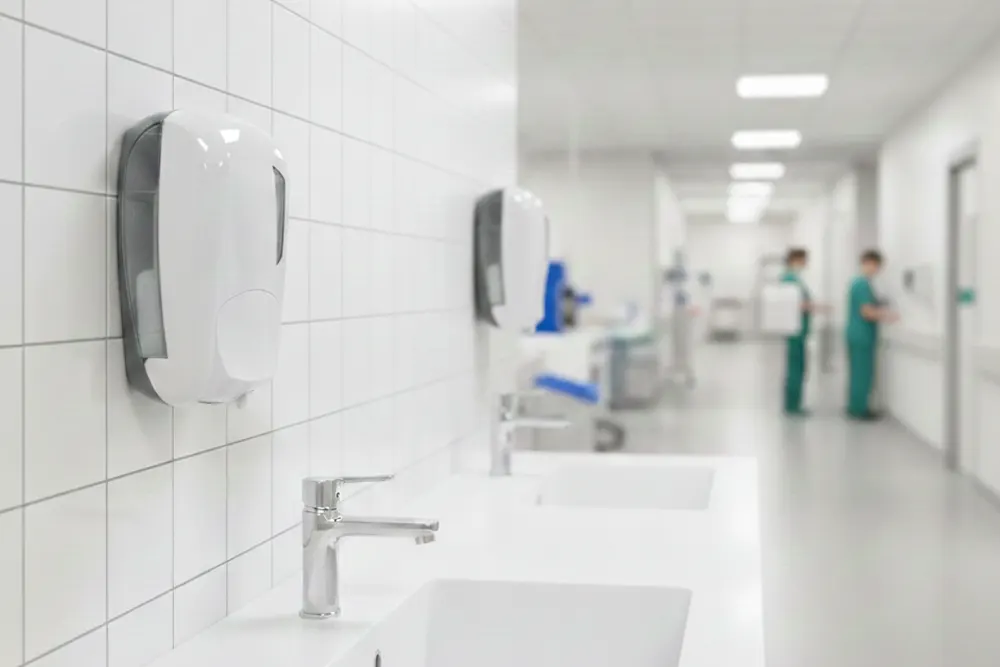
Luu dispensers are designed in accordance with European standards for healthcare institutions. The minimalist design enables easy maintenance, while the closed paper dispensing system significantly reduces the risk of contamination and contributes to maintaining a high level of hygiene.
How to choose hospital equipment – 3 key criteria
The selection of sanitary medical equipment must be part of an infection control strategy and the protection of the healthcare system.
-
Antibacterial materials and resistance to disinfection
Hospital equipment is exposed daily to strong chemical disinfectants.
Materials must be:
- Antibacterial and hygienically safe
- Chemically stable during frequent cleaning
- Structurally durable without changes in color and quality
Stainless steel (inox) represents the standard in the medical industry because:
- It does not react with disinfectants
- It does not develop microcracks that can retain microorganisms
- It ensures a long service life of the equipment
- It is suitable for intensive hospital use
Modern medical polymers can be an alternative only if they possess:
- UV stability
- Resistance to aggressive disinfecting agents
- A non-porous and smooth surface structure
- Easy maintenance without retaining dirt
Luu equipment is designed to support modern hygiene protocols, long-term functionality, and professional standards of healthcare institutions.
2. Contactless (No-Touch) technology
Modern hospital hygiene is based on a simple but extremely important principle – the less physical contact, the lower the risk of contamination.
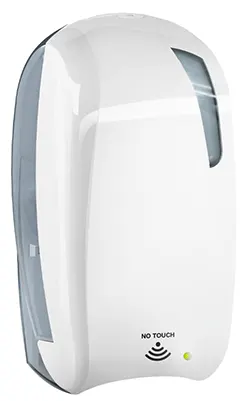
Contactless systems are becoming an increasingly important part of medical institutions that aim to improve patient and staff safety. Contactless systems for soap, hand disinfection, and paper towels are becoming the standard of modern healthcare facilities.
Advantages of No-Touch technology:
- Reduces cross-contamination
- Supports infection control protocols
- Increases patient trust
- Speeds up the work of medical staff
- Reduces the need for maintenance servicing
3. Design without “dead corners”
The sterility of a medical space also depends on equipment design.
Ideal medical equipment should have:
- Rounded edges
- A minimal number of joints
- Hidden mechanical elements
- Smooth transitions between surfaces
Sharp angles and complex structures can retain:
- Dust
- Moisture
- Biofilm
- Microorganisms
Luu dispensers are developed for demanding hospital conditions, enabling stable operation in spaces with high traffic.
Why are the specific requirements of equipping different hospital zones important?
The specific requirements of equipping hospital zones are crucial because each zone has different functional and hygienic demands. Proper equipment planning contributes to infection control, operational efficiency, and patient safety.
Luu medical equipment is designed to support the specific needs of different hospital zones, combining functionality, reliability, and modern hygiene standards.
How to choose hospital equipment – Why are operating rooms and intensive care units the most hygienically demanding zones?
Operating rooms and intensive care units represent the highest-risk zones for infection development, as patients in these areas are particularly vulnerable. Therefore, strict hygiene protocols are applied, and hermetically sealed systems such as “bag-in-box” technology are used to reduce contact between contents and air and minimize the risk of contamination.
How to choose equipment for hospital corridors and waiting areas?
Hospital corridors and waiting areas belong to zones with high patient and visitor traffic, which is why equipment must be designed for intensive use. Spaces of this type require equipment with large consumable capacity, resistance to daily use, secure locking mechanisms, and easy refilling. Such an approach reduces maintenance needs and ensures stable operation of medical equipment.
Why is functional and discreet equipment important in patient rooms?
In patient rooms, the priority is to create a calm and safe environment that supports the patient recovery process. Equipment must be functionally designed, visually discreet, and adapted to the needs of both medical staff and patients.
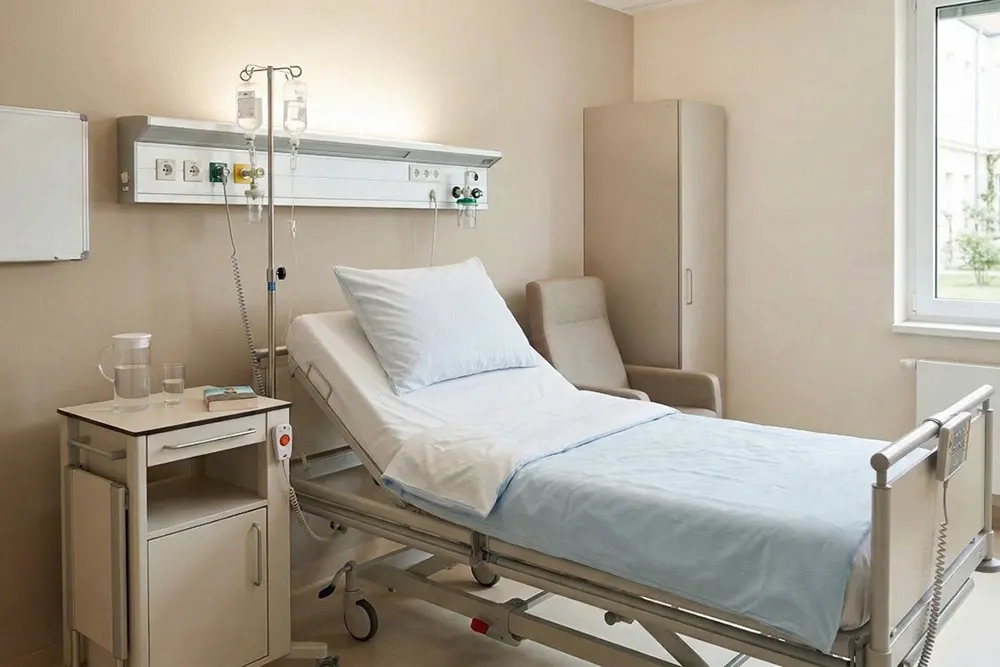
The use of “soft-close” mechanisms reduces noise levels and contributes to greater comfort. A minimalist and simple design facilitates hygienic maintenance and supports the professional standard of healthcare space cleanliness.
Key characteristics of equipment for patient rooms:
- Reduction of acoustic load during use
- Soft-close technology for controlled and quiet closing
- Simple and efficient hygienic maintenance
- Structurally minimalist and functional design
- High level of safety and comfort for patients
How to choose hospital equipment – Paper towels or hand dryers in hospitals?
In a medical environment, paper towels represent the recommended hygiene standard.
Paper towels enable:
- Mechanical removal of bacteria from the skin surface
- Lower dispersion of microorganisms in the air (aerosolization)
- Precise and controlled material consumption
Dispenser systems that dispense paper sheet-by-sheet provide a particular advantage. Such systems further reduce the risk of contamination, as each user touches only their own towel, without contact with the internal contents of the dispenser.
Luu Autocut technology
The Autocut system enables:
- Automatic dispensing of a single paper sheet
- Elimination of physical contact with the device
- Waste reduction
- Precise material consumption
In a medical environment, every unnecessary touch can represent a potential hygienic risk. Therefore, contactless systems are no longer an additional convenience, but part of the modern safety standard in healthcare institutions. The Luu Autocut system represents an advanced solution for hygienic paper towel dispensing in healthcare institutions.
How does premium equipment quality affect hospital operational costs?
Premium medical equipment represents a strategic investment in healthcare safety and the long-term sustainable operation of healthcare institutions.
Advantages include:
- Reduction of hospital infections
- Shorter patient stays
- Lower treatment costs
- Strengthening the institution’s reputation
Premium equipment designed for a high number of usage cycles ensures:
- Less frequent component replacement
- Fewer service interventions
- Stable operational costs
Luu medical equipment represents an example of a controlled and cost-effective long-term investment, as premium quality is not just a procurement cost – but a strategic decision that contributes to efficiency, safety, and the professional standard of a healthcare institution.
How to choose hospital equipment – What does a checklist for purchasing medical equipment include?
Before purchasing medical equipment, a detailed review of key technical and hygienic characteristics is recommended.
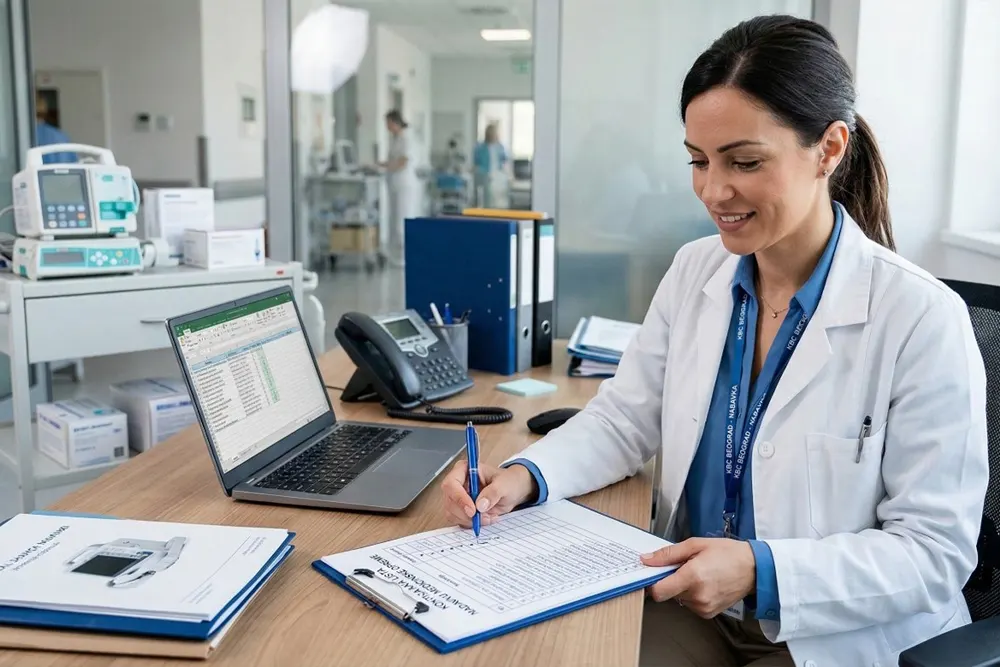
Before purchase, check:
☑ Resistance to disinfection
☑ Contactless system operation
☑ Easy cleaning
☑ Certifications and compliance with standards
☑ Long-term supply of consumables
Practical experience – the importance of medical equipment quality
Work on improving hygiene in healthcare institutions often begins with seemingly simple, but operationally very important details. How we helped a hospital in Belgrade raise hygiene to a higher level by implementing electronic dispensers and the Autocut system, the goal was to reduce the possibility of contamination of paper and soap dispenser handles.
In our practice, we observed that the greatest hygiene risks are not found in the base material of the equipment, but in surfaces that are frequently touched during daily operations. Therefore, we tested various models of contactless dispensers and concluded that electronic paper towel dispensing systems enable safer and more practical use.
During implementation in a hospital environment, electronic and Autocut dispensers enabled paper dispensing without direct contact with the internal mechanism of the device, significantly reducing the risk of surface contamination. Particular attention was directed toward handles and activation zones of soap dispensers, as these are the areas most frequently touched in practice.
Improving hospital hygiene requires a combination of proper technical solutions and practical application in the daily operations of healthcare institutions. The implementation of electronic and Autocut dispensers represents an effective way to reduce the risk of contamination, especially in frequently touched zones.
Proper selection of hospital equipment includes three key principles:
Contactless technology reduces critical touchpoints and contamination risk.
Antimicrobial and chemically resistant materials guarantee long-term hygienic stability.
Minimalist design enables efficient maintenance without hidden points of dirt accumulation.
There is no room for “out-of-order” in a hospital. Equipment must function flawlessly under constant load. The focus is not on the product. The focus is on a system that operates without compromise.
Luu equipment is developed for institutions that do not accept compromise in hygiene, safety, and functionality. For technical specifications and models, see here or contact us for an offer tailored to your institution.
Related topics:
- Guide through HACCP standards for clinics with their own kitchen.
- Why is inox the best friend of medical hygiene?
- How to choose the ideal soap dispensers: A comprehensive guide to hygiene, aesthetics, and savings
Subscribe to the LUU newsletter and stay up to date with the latest offers.