
Table of Contents
Paper towel waste in commercial facilities can be prevented in several ways. These include selecting the right dispenser with controlled dispensing, ensuring adequate procurement and quantity of paper towels, choosing the appropriate type of towel, and regularly monitoring consumption. Dispensers that dispense one sheet at a time reduce excessive pulling by up to 30%. The layout of the facility and the type of paper also contribute to overall savings and lower maintenance costs.
If you would like to learn which type of paper towel is most suitable for your commercial facility and which dispenser it is compatible with, read our comprehensive blog: Paper towels in commercial facilities: Everything you need to know about types, savings, and hygiene.
What has the greatest impact on paper towel waste?
Paper towel waste is primarily affected by the type of dispenser, towel quality, user traffic, replenishment practices, and the habits of employees and visitors. When even one of these factors does not match the facility’s needs, paper consumption can increase significantly.
Why does paper towel waste occur in commercial facilities?
Paper towel waste in commercial facilities most commonly occurs because of open holders and dispensers without controlled dispensing. In such cases, users take more sheets than they actually need. Additional causes include insufficient dispenser capacity compared to user traffic and incompatible dispensers. The absence of a mechanism that limits the amount of paper dispensed per use also contributes to unnecessary waste.
Are folded paper towels or roll paper towels better for preventing paper towel waste?
Folded paper towels and roll paper towels can both prevent paper towel waste just as effectively when used with the appropriate professional dispenser. Folded paper towels with single-sheet dispensing are often suitable for restrooms with low to medium traffic. In high-traffic facilities, on the other hand, autocut or roll paper towel dispensers that dispense a predetermined paper length are more commonly used.
Table: Compatible paper towels and dispensers
| Dispenser | Paper towel |
| Autocut dispenser | Autocut paper towels |
| Paper towel dispenser | Folded paper towels |
| Paper towel dispenser – Large | Folded paper towels |
| Center-pull paper towel dispenser | Center-pull paper towels |
| DUO liquid soap and paper towel dispenser | Folded paper towels |
| DUO foam soap and paper towel dispenser | Folded paper towels |
Does paper towel quality affect paper towel waste?
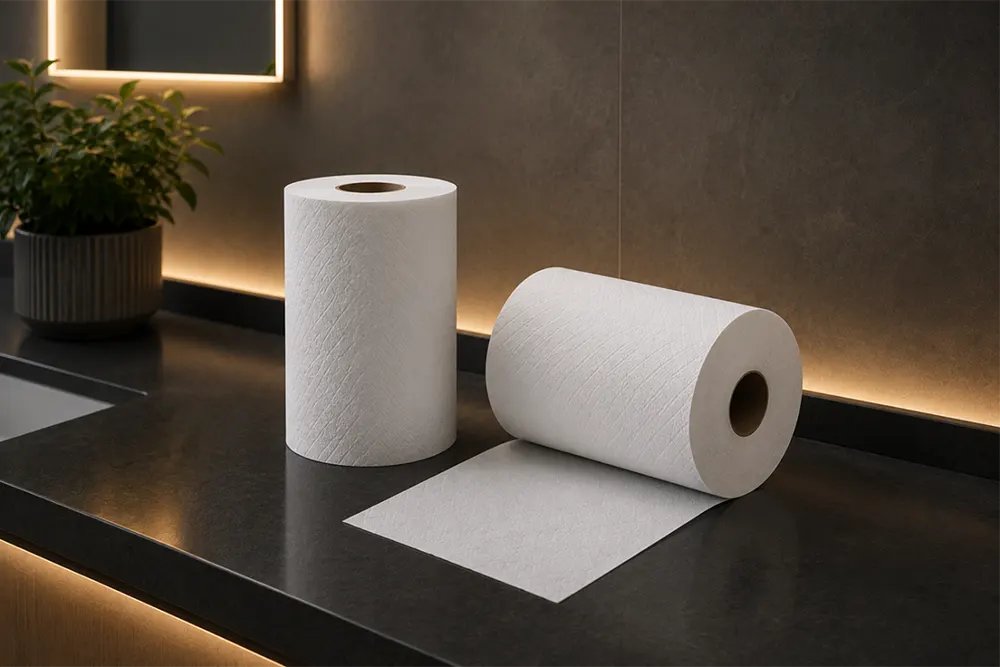
The quality of paper towels directly affects the amount of paper users consume when drying their hands. Paper towels with higher absorbency allow hands to dry more efficiently using fewer sheets. Lower-quality products, on the other hand, often require users to use two or three times more paper.
When choosing paper towels, pay attention to:
- absorbency
- paper strength
- number of plies
- basis weight
- pulp quality
- dispenser compatibility.
A higher-quality paper towel often has a higher unit price, but it can reduce overall paper consumption over time.
Which dispensers prevent paper towel waste?
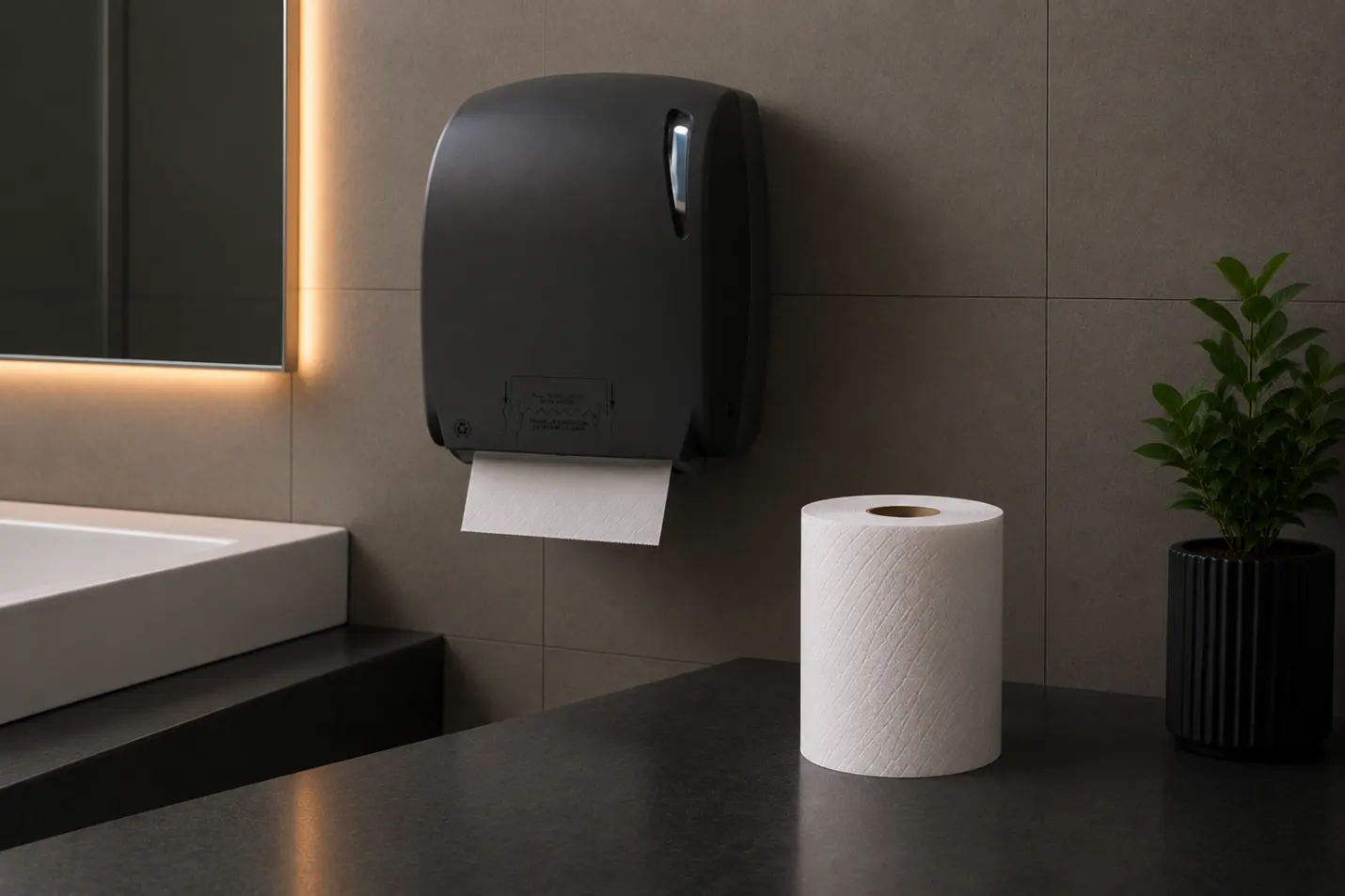
Dispensers with controlled dispensing prevent paper towel waste most effectively. They dispense one paper towel or a predetermined paper length with each use. This prevents users from taking more paper than they need. As a result, paper consumption is optimized and commercial facility maintenance costs are reduced.
The most effective models include:
- Autocut dispenser: automatically cuts approximately 27 cm of paper with each pull. Users receive a predetermined amount of paper, without the possibility of pulling out a longer piece.
- Center-pull paper towel dispenser: allows users to take one paper towel easily with one hand. This is especially practical in production facilities, kitchens, and workshops.
- Paper towel dispenser: dispenses paper towels one at a time, so the next sheet appears only after the previous one has been removed. This reduces unnecessary paper consumption.
- Large paper towel dispenser: operates on the same single-sheet dispensing principle. Thanks to its larger capacity, it requires less frequent refilling and is suitable for high-traffic restrooms.
This is also confirmed by UniFirst. Dispensers with controlled dispensing in commercial facilities significantly reduce waste compared to open-roll systems. Smart dispensers with strict dispensing control provide the greatest savings.
How can employee education reduce paper towel consumption?
In facilities where employees use restrooms every day, brief training can encourage more responsible paper towel use. When employees understand why they should use only as much paper as necessary, both costs and waste decrease.
Training may include:
- proper dispenser use
- the importance of responsible consumption
- reporting empty or jammed dispensers
- proper disposal of used paper towels.
How can you monitor paper towel consumption?
Regular monitoring of paper towel consumption helps identify irregularities in time and optimize purchasing. Analyzing the number of refills, the number of packs used, and the frequency of use across different restrooms provides a clear picture of where the greatest losses occur.
It is recommended to monitor:
- the number of paper towel refills per facility
- the number of users who use paper towels
- monthly paper towel consumption
- paper towel costs per restroom
- the frequency of emergency refills
This data makes it easier to plan procurement and choose the most suitable products.
How much can commercial facilities save by reducing paper towel waste?
Commercial facilities can significantly reduce procurement costs by implementing controlled dispensing. Excessive consumption caused by unsuitable dispensers directly increases purchasing and refill frequency. Lower paper consumption also reduces the time staff spend refilling dispensers. This further lowers operating costs over the long term.
How does facility traffic affect paper towel waste?
The higher the number of restroom users, the greater the likelihood of increased paper towel consumption. For this reason, you should select dispensers and paper towel types according to the intensity of facility use to prevent unnecessary paper towel waste and frequent refilling.
Table showing an example:
| Facility type | Recommended solution |
| Offices | Folded paper towels |
| Hotels | Folded paper towels or autocut paper towels |
| Restaurants | Controlled-dispensing roll paper towels |
| Shopping malls | Autocut paper towels |
| Factories | Center-pull paper towels or autocut paper towels |
What are the most common mistakes that increase paper towel waste?
The biggest mistakes occur when purchasing decisions are based solely on product price, without analyzing usage patterns and facility requirements. This results in higher paper consumption, more frequent refills, and higher overall maintenance costs.
The most common mistakes include:
- buying the cheapest paper towels
- choosing the wrong paper towel dispenser
- using incompatible dispensers and paper towels
- irregular refilling
- failing to monitor consumption
- not having a procurement plan.
Case study: Office building in Niš
Problem:
In an office building in Niš, more than 400 employees and visitors use the facilities every day. Management noticed increased paper towel consumption and more frequent dispenser refills. The existing dispensers allowed users to pull out more paper than they actually needed. This led to higher purchasing costs, more frequent staff intervention, and a larger amount of paper waste.
Solution:
To reduce paper towel waste, the existing dispensers were replaced with Autocut dispensers. With each pull, these dispensers automatically dispense a pre-cut paper towel approximately 27 cm long. At the same time, autocut paper towels, which are fully compatible with autocut dispensers, were introduced. In addition, the refill schedule was adjusted to actual user traffic to ensure that the dispensers were always available and properly stocked.
Result
After six months, paper towel consumption decreased by 32%. The number of emergency refills dropped by 24%, while the time required to refill dispensers was reduced by 21%. Thanks to controlled dispensing, users took only as much paper as they needed. The restrooms remained cleaner, and both procurement and maintenance costs were significantly lower.
FAQ
How many paper towels are enough for drying hands?
It depends on the quality of the paper towels. Professional paper towels with higher absorbency often allow users to dry their hands completely with just one or two sheets.
Does paper quality affect consumption?
Yes. Higher-quality paper towels absorb moisture more efficiently, so users usually need fewer sheets than they would with lower-quality products.
How do you choose the right paper towel dispenser?
Consider the number of users, the type of facility, compatibility with the paper towels, and the dispensing method.
Is it possible to reduce costs without reducing quality?
Yes. In many cases, choosing professional paper towels and the right dispenser can reduce overall consumption while maintaining or even improving the user experience.
A smartly selected dispenser and high-quality paper towels reduce consumption, simplify maintenance, and help keep facilities cleaner. Long-term savings begin with the right choice.
Subscribe to the LUU newsletter and stay up to date with our latest offers.