
Table of Contents
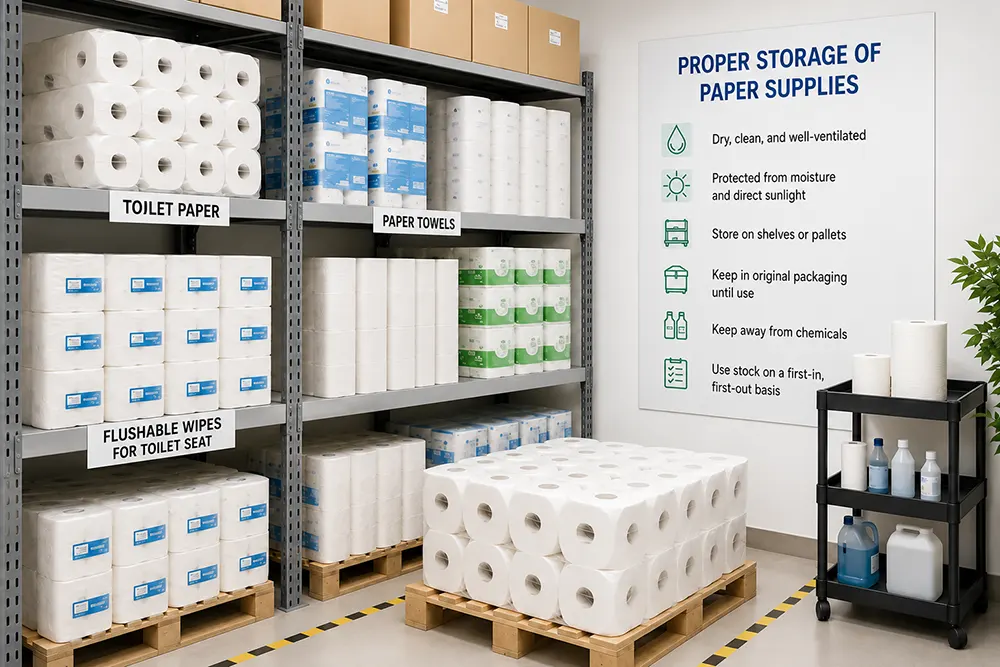
How to properly store paper products? Properly storing paper products means keeping paper items such as paper towels, toilet paper, and paper toilet seat covers in dry, clean, and well-ventilated areas, protected from moisture, direct sunlight, and sources of contamination. This helps paper retain its absorbency, strength, and hygiene, while reducing the risk of damage, unnecessary waste, and frequent product replacement.
According to paragraf.rs, warehouse space for general-use products must be dry and well-ventilated, with appropriate construction standards, ventilation, and protection against rodents and insects.
Improper storage can lead to packaging deformation, reduced absorbency, and unnecessary waste. Therefore, in addition to choosing high-quality products, it is equally important to provide proper storage conditions.
If you want to learn how to choose the right products for different types of facilities, read our guide: Paper products: A complete guide to types, systems, and applications
How to properly store paper products to maintain their quality?
Paper products maintain their quality when stored in a dry, clean, and well-ventilated area, protected from moisture, extreme temperature changes, and direct sunlight. Proper storage conditions preserve the products’ absorbency, strength, and hygiene until they are ready for use.
Why is moisture the biggest problem for paper products?
Moisture is one of the biggest enemies of paper products because it can reduce paper strength, damage its structure, and decrease its absorbency. It also increases the risk of packaging damage and shortens the period during which products retain their original properties.
Pay special attention to warehouses without adequate ventilation, basement storage areas, and locations near water sources. Always protect paper products from direct contact with moisture and condensation.
How does temperature affect the quality of paper products?
A stable temperature helps paper retain its properties during storage. Large temperature fluctuations can cause condensation inside the packaging, which negatively affects product quality.
Ideally, avoid storing paper products in areas that become excessively hot during summer or are exposed to freezing temperatures during winter.
How to properly store paper products – What are the most common mistakes?
The most common mistakes when storing paper products include exposing them to moisture, storing them directly on the floor, damaging the original packaging, and keeping them near chemicals. These conditions can reduce paper quality and increase waste.
Other common mistakes include:
- exposure to direct sunlight
- purchasing larger quantities than actual needs require
- storing products in areas where insects and rodents may enter
How much paper product inventory should you keep in stock?
Most commercial facilities operate most efficiently with inventory for one to three months, depending on consumption and delivery schedules. Excess inventory takes up valuable space and increases the risk of product damage, while insufficient inventory can lead to shortages.
Regularly monitoring consumption makes procurement planning easier and inventory management more efficient.
How to properly store paper products in hotels, restaurants, and manufacturing facilities?
Storage methods should match the type of facility and its level of consumption. Although the basic rules remain the same, warehouse organization varies depending on the purpose of the facility.
| Facility type | Recommendation |
| Hotel | Dry central storage with smaller stock on each floor |
| Restaurant | Store separately from kitchen chemicals and steam sources |
| Office building | Organize storage by floors or departments |
| Healthcare facility | Keep products in their original packaging until use |
| Manufacturing facility | Protect paper from dust, moisture, and mechanical damage |
How should you organize warehouse space for large quantities of paper products?
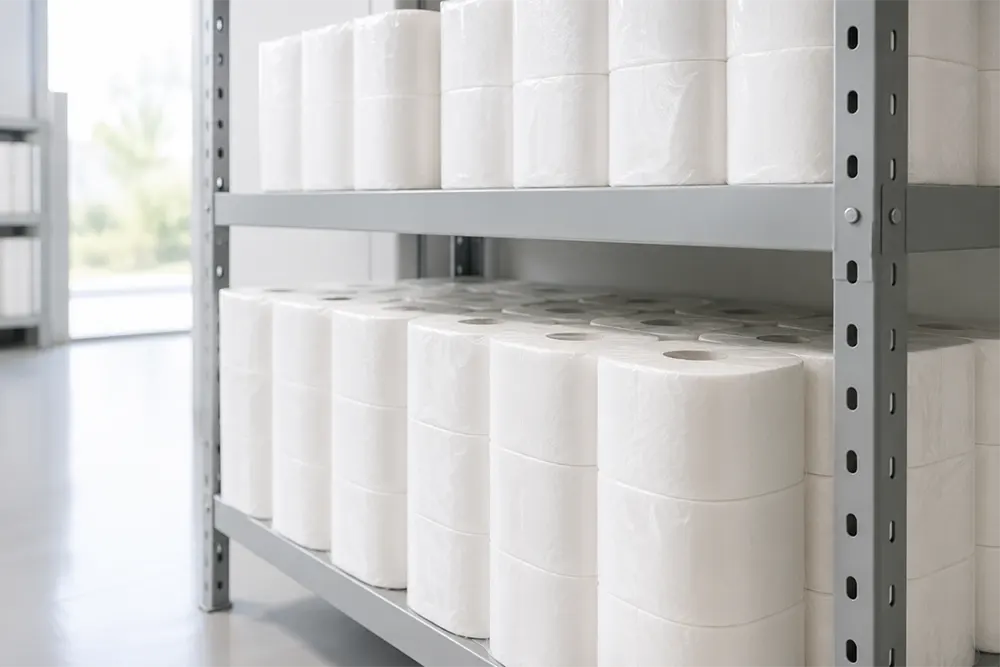
Large quantities of paper products are best stored on shelves or pallets in a dry, clean, and well-organized area. This arrangement makes products easier to access, speeds up dispenser refills, protects paper from damage, and enables more efficient inventory management.
When purchasing paper products in larger quantities, warehouse organization becomes just as important as the quality of the products themselves. A well-planned layout allows employees to quickly locate the required products, reduces refill time, and prevents unnecessary product handling.
For more efficient organization, it is recommended to:
- store products on metal shelves or pallets, never directly on the floor
- separate different types of paper products (toilet paper, paper towels, paper toilet seat covers)
- separate scented paper products from unscented ones to prevent scents from transferring to other products
- clearly label shelves or storage zones
- place the most frequently used products on the most accessible shelves
How does the original packaging protect paper products during storage?
The original packaging protects paper products from dust, moisture, dirt, and mechanical damage during storage. For this reason, it is recommended to open products only immediately before refilling dispensers so they retain their hygiene and quality.
How can you tell if paper products have been stored improperly?
Paper products exposed to unsuitable storage conditions may have deformed packaging, softened paper, reduced absorbency, or visible signs of moisture. Inspect such products before use to avoid problems during everyday operations.
Should paper products be stored in their original shipping packaging or unpacked?
It is best to store paper products in their original shipping packaging until they are ready for use. This reduces exposure to dust, moisture, and other external factors while keeping products protected throughout the storage period.
How should you transport paper products to preserve their quality?
Transport paper products in enclosed, dry vehicles protected from moisture, rain, and mechanical damage. Original packaging and proper stacking during transport help paper retain its absorbency, strength, and hygiene until delivery and storage.
Real-world example: Office building with multiple tenants
Problem:
Paper products were stored on the floor in a shared warehouse without clear organization, causing occasional packaging damage and making restroom refills take longer than necessary.
Solution:
The paper products were moved onto metal shelves and pallets, organized by product type, and kept in their original packaging until use.
Result:
- better organized and cleaner warehouse
- fewer damaged packages
- faster dispenser refills
- simpler inventory planning and management
How to properly store paper products – FAQ
Can paper products be stored directly on the floor?
No. It is recommended to store them on pallets or shelves to protect the products from moisture and dirt.
How long can paper products remain in storage?
When stored under proper conditions and in their original packaging, paper products can retain their properties for an extended period.
Does sunlight affect paper?
Yes. Prolonged exposure to direct sunlight can negatively affect both the packaging and the paper itself.
Should different types of paper products be stored separately?
It is recommended to organize products by type and intended use to make dispenser refills easier and more efficient.
Less waste. More reliability.
When you use high-quality products and organize storage properly, everyday operations become much easier. Less waste, fewer refills, and greater reliability every day.
Subscribe to the LUU newsletter and stay up to date with our latest offers.