
Table of Contents
Which toilet paper rolls are the right choice? It depends on user traffic and the needs of your facility. A 75 g roll is a practical solution for restrooms with fewer users, while a 100 g roll is better suited to busier facilities because it allows for longer use between replacements. Both options are made from 100% cellulose and provide a high level of comfort, hygiene, and reliability for everyday use.
To learn about the other types of toilet paper used in commercial facilities and why it is important to keep it in professional dispensers, read our blog: Professional toilet paper for commercial facilities: The perfect balance of gentle touch, superior cleanliness, and optimal savings.
What characterises professional toilet paper rolls?
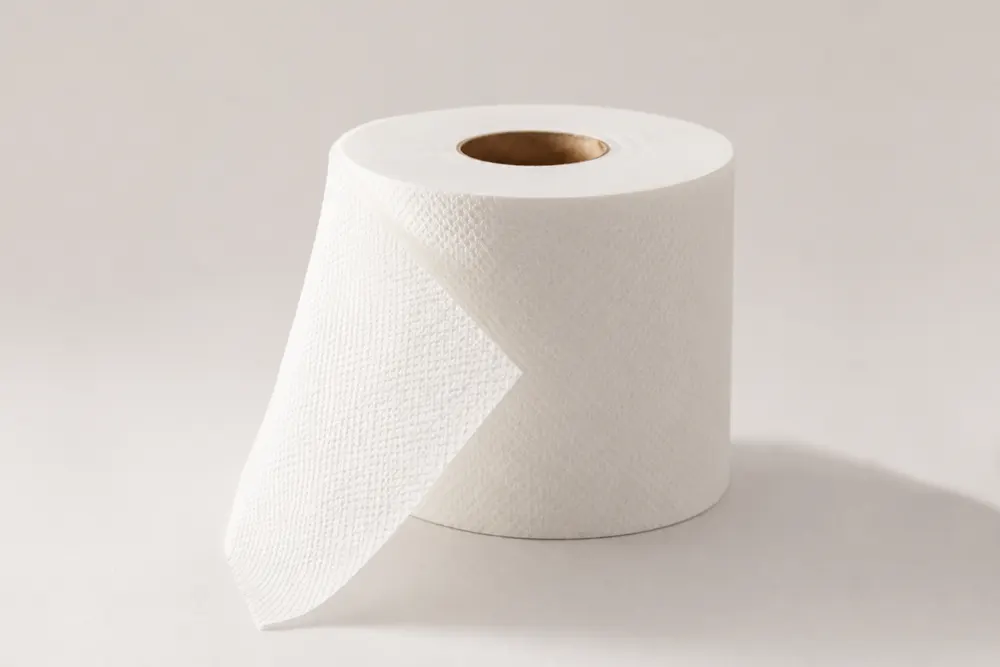
Professional toilet paper rolls are characterised by high manufacturing quality, a pleasant feel, and reliable performance during everyday use. Thanks to their 100% cellulose composition and three-ply structure, they provide a high level of comfort for users and are suitable for facilities with varying levels of traffic.
Table: Toilet paper rolls specifications
| Characteristic | Value |
| Composition | 100% cellulose |
| Number of plies | 3 |
| Grammage | 3 × 18 g/m² |
| Transport packaging | 40/1 |
What is the difference between 75 g and 100 g toilet paper?
The main difference between 75 g and 100 g rolls is the amount of paper per roll. A 100 g roll contains more paper and allows for longer use between replacements, while a 75 g roll is a practical choice for restrooms with lower user traffic.
Comparison table
| Characteristic | Toilet paper rolls 75 g | Toilet paper rolls 100 g |
| Amount of paper per roll | Standard | Greater |
| Replacement frequency | More frequent | Less frequent |
| Facilities with lower traffic | ✅ | ⚪ |
| Facilities with higher traffic | ⚪ | ✅ |
| Continuity of use | Good | Very good |
How do you know whether you need a 75 g or a 100 g roll?
If the roll needs replacing several times a day or the restroom is used by a large number of people, a 100 g roll is the more practical choice. For smaller offices and facilities with lower traffic, a 75 g roll is sufficient. Choosing the right option reduces the frequency of refills and makes restroom maintenance easier.
Table: Selection by facility type
| Facility type | Recommendation |
| Small office | 75 g |
| Medical practice | 75 g |
| Restaurant | 100 g |
| Hotel | 100 g |
| Public institution | 100 g |
| Industrial facility | 100 g |
Does the quality of toilet paper affect the user experience?
Yes. The quality of toilet paper directly affects comfort, hygiene, and the overall impression of a facility. Paper made from 100% cellulose provides a softer feel, good strength, and greater absorbency, which is why professionals often use it in environments where user experience matters.
According to the World Toilet Organization, the quality and standard of sanitary facilities have a significant impact on the perception of hygiene, comfort, and the overall user experience.
Toilet paper rolls – Why should they be protected in a professional dispenser?
Toilet paper should be protected in a professional dispenser because this reduces exposure to moisture, dust, and unnecessary user contact. The dispenser keeps the paper clean until the moment of use, contributes to a tidier restroom appearance, and allows for more controlled consumption, which is particularly important in facilities with a high volume of visitors.
Case study: Institute of Public Health Požarevac
Problem
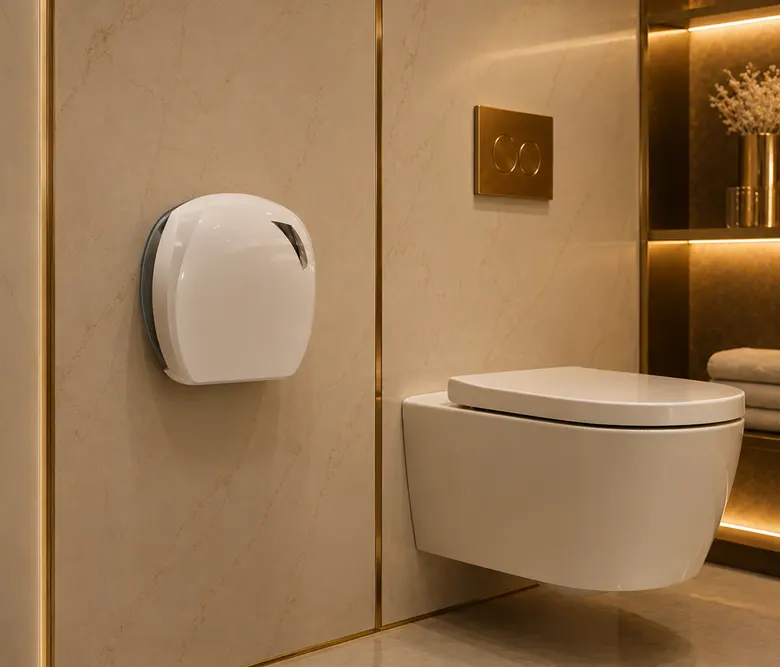
In the restrooms of the Institute of Public Health Požarevac, space was limited, and separate holders for toilet paper and toilet brushes made it difficult to maintain a tidy appearance in the sanitary facilities. Employees and visitors used the restrooms every day, so it was important to ensure a high level of hygiene, easier maintenance, and a better user experience. In addition, the facility used lower-quality paper that did not provide the expected level of comfort.
Solution
The facility installed DUO dispensers for toilet paper and toilet brushes in white (Blanc), combining two functions into a single unit. At the same time, it introduced three-ply 75 g toilet paper rolls made from 100% cellulose, providing greater softness and a more comfortable user experience.
Results
- 42% less space occupied in the area around the toilet
- 31% less time required for restroom maintenance
- 27% fewer reports related to missing or untidy equipment
- 36% higher user satisfaction according to internal surveys
- improved visual appearance and restroom organisation
- reduced number of contact surfaces and simplified cleaning of the area
Thanks to the DUO dispensers and higher-quality toilet paper, the Institute of Public Health Požarevac improved the functionality and organisation of its sanitary facilities, provided greater comfort for users, and created a tidier environment that meets the standards of an institution whose primary mission is to protect public health.
Toilet paper rolls – FAQ
Are both options made from 100% cellulose?
Yes. Both the 75 g roll and the 100 g roll are made from 100% cellulose and feature a three-ply structure.
Does a higher grammage also mean better quality?
No. Both options have the same composition and quality. The difference lies primarily in the amount of paper per roll and the replacement frequency.
Which option do high-traffic facilities choose most often?
Facilities with higher user traffic most often choose the 100 g roll because it allows for longer use between refills.
The quality of a restroom often creates the first impression of the quality of the entire organisation. That is why choosing the right roll is not only a matter of consumption but also of user experience. Find the solution tailored to the needs of your facility.
Subscribe to the LUU newsletter and stay up to date with our latest offers.