
Table of Contents
Toilet paper softness is determined by a combination of several characteristics. These include fiber flexibility, surface smoothness, and the paper’s embossing pattern. Today, in addition to touch-based evaluation, laboratories use objective instruments to measure softness. Softer toilet paper is often associated with a higher price. However, its value also depends on the quality of the raw material, strength, absorbency, and the manufacturing process.
If you want to learn how to choose high-quality, soft professional toilet paper made from 100% cellulose for a commercial facility, read our guide: Professional toilet paper for commercial facilities: The perfect balance of gentle touch, superior cleanliness, and optimal savings
What is toilet paper softness and what does it depend on?
Toilet paper softness is the feeling of comfort when the paper comes into contact with the skin. It depends on the type and quality of the fibers, how they are processed, the paper’s embossing pattern, the number of plies, and the manufacturing technology.
According to BioResources (NC State), softness is defined as a function of smoothness, compressibility, stiffness, and the paper’s ability to wrinkle. Because these factors work together, two toilet papers can provide completely different softness even if they look very similar.
How do manufacturers objectively measure softness?
Manufacturers measure toilet paper softness using laboratory instruments. These instruments analyze fiber flexibility, surface roughness, and paper smoothness.
According to Papnews, the industry has gradually shifted softness evaluation from touch-based assessment to objective instruments. One of these is the Tissue Softness Analyzer (TSA), which measures the actual softness, roughness, and stiffness of paper. Unlike touch-based evaluation, these measurements provide objective and repeatable results. This allows for more accurate comparisons of the quality of different products.
Why is the number of plies not the same as toilet paper quality?
The number of plies alone does not determine the quality of toilet paper. Fiber quality, the manufacturing process, and the paper’s embossing pattern have a much greater impact on softness and comfort. As a result, high-quality two-ply toilet paper can be more comfortable to use than poorly manufactured three-ply toilet paper.
Does softer toilet paper really cost more?
Softer toilet paper often comes at a higher price. This is because manufacturers use higher-quality fibers and more advanced processing technologies. However, softness is not the only factor that affects the price. The number of plies, strength, absorbency, raw material type, and overall product quality also influence the cost.
According to a review published in BioResources, research conducted in the North American market found a correlation between greater toilet paper softness and a higher retail price. However, other product characteristics also influence the price.
How can you identify high-quality toilet paper without laboratory testing?
High-quality toilet paper should provide a pleasant feeling during use, offer sufficient strength, and dissolve easily in water after flushing. This balance delivers greater user comfort and more reliable everyday performance.
How can you find the best balance between softness, strength, and price?
The best choice is not always the softest toilet paper. A better option is one that provides a good balance between comfort, strength, absorbency, and durability. This is especially important in commercial facilities, where choosing professional toilet paper ensures a pleasant user experience while supporting more efficient consumption and lower long-term costs.
How does the number of toilet paper plies affect softness and price?
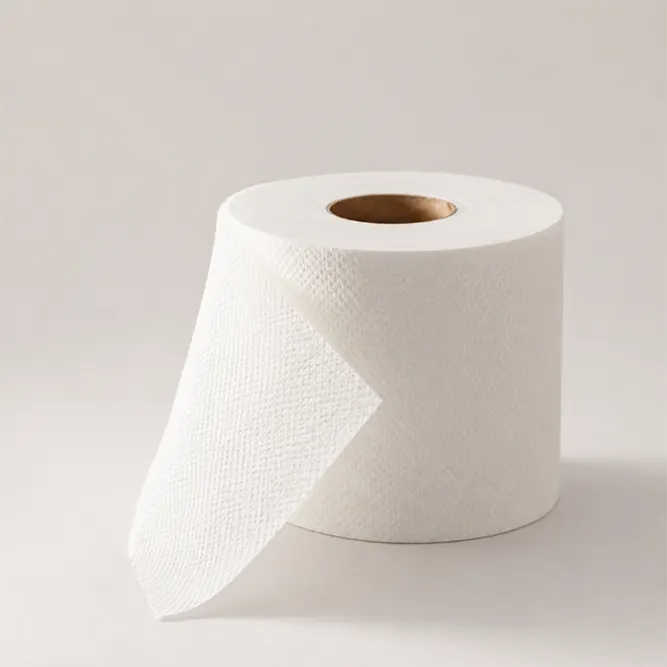
A greater number of plies usually increases the feeling of softness because the paper becomes thicker and creates more cushioning between the layers. This directly increases the product’s price. However, softness also depends on fiber quality and manufacturing technology, so a better-made two-ply paper can be softer and more cost-effective than a lower-quality three-ply paper.
Does the type of fiber affect how toilet paper feels?
The type of fiber has a significant impact on how toilet paper feels. This is because each fiber has a different length, density, and flexibility. Short fibers, such as those from hardwood, contribute to softness and comfort. Longer fibers, such as those from softwood or bamboo, provide greater strength but may have a slightly rougher texture.
Table: Factors that affect softness and price
| Factor | How does it affect softness? | How does it affect the price? |
| Fiber type (cellulose, bamboo) | Shorter and more flexible fibers provide greater softness | Pure cellulose usually increases the product’s price |
| Number of plies | More plies increase softness and thickness | Directly increases the price per roll |
| Processing technology (creping, embossing) | Improves softness without changing the raw material | Advanced technology increases production costs |
| Strength and bonding resins | Greater strength can reduce the feeling of softness | The balance between softness and strength affects quality and price |
Real-world example: Business hotel with a conference center
Problem
A business hotel with a large number of corporate guests used low-grade three-ply toilet paper because it believed that more plies guaranteed higher quality. However, guest reviews often mentioned that the paper felt rough and failed to reflect the standards of a premium property.
Solution
The hotel replaced the existing product with professional two-ply toilet paper made from 100% cellulose, along with suitable dispensers that allowed controlled paper dispensing.
During the selection process, the hotel placed greater importance on fiber quality and softness than on the number of plies alone.
Result
- higher guest satisfaction with the hygiene of shared restrooms
- the same level of consumption maintained thanks to controlled paper dispensing
- an improved perception of the property’s quality, especially among business guests who use conference rooms and shared facilities every day
Toilet paper softness – FAQ
Is it worth choosing softer toilet paper for commercial facilities?
Cost-effectiveness depends on the type of facility and user expectations. In hotels, restaurants, and places where customer experience is a priority, softer toilet paper justifies the higher cost by creating a better impression on guests. In high-traffic facilities, such as factories or public institutions, strength and cost-efficiency are often more important than softness.
How can you balance softness and budget when purchasing paper products for larger facilities?
The best balance comes from choosing mid-range toilet paper. It offers satisfactory softness while keeping the cost per sheet under control. Instead of selecting the softest or the cheapest product, it is more cost-effective to evaluate the facility’s actual needs, the number of users, and the frequency of use. Based on these factors, you can choose a quality level that fits the budget.
How does toilet paper softness affect the perception of a brand or facility?
Toilet paper softness indirectly affects quality perception because people see it as a sign of attention to detail and high facility standards. This impression is especially important in the hospitality industry, where guests unconsciously associate the quality of small details, such as toilet paper, with the overall standard of service and hygiene.
Details shape the overall impression far more than they may seem at first glance. Choose professional toilet paper that provides a pleasant feeling with every use, along with reliable quality and long-term cost-effectiveness.
Subscribe to the LUU newsletter and stay up to date with the latest offers.