
Table of Contents
Misuse of paper products in commercial facilities refers to excessive consumption, theft and vandalism involving paper towels, toilet paper and toilet seat covers. Each form directly increases procurement costs and places an additional burden on staff responsible for refilling supplies. Choosing the right dispensers solves all three problems at the same time.
An official overview of standards for the cleaning industry and hygiene maintenance protocols is available at osha.gov.
If you want to learn how to properly equip the restrooms in your commercial facility, read our blog: Paper products: A complete guide to types, systems and applications.
How can you prevent misuse of paper products in commercial facilities?
Misuse of paper products in commercial facilities can be prevented by choosing lockable, high-capacity dispensers. Manufacturers typically make them from durable materials such as stainless steel and reinforced ABS plastic.
Locking mechanisms prevent unauthorized access to the entire roll or pack. Higher capacity reduces the need for staff to leave spare supplies in visible locations, which often attracts theft.
Combining these two factors solves most problems without requiring additional staff involvement.
What are the signs of misuse of paper products in commercial facilities?
Signs of misuse of paper products in commercial facilities include:
- unusually rapid consumption of toilet paper and paper towels
- frequent disappearance of spare rolls
- empty dispensers shortly after refilling
- damaged or removed dispensers
- increased procurement costs
These signs indicate that the dispensing and protection system for paper products needs improvement.
Which type of paper product is least vulnerable to misuse?
Paper products designed for professional enclosed dispensers are least vulnerable to misuse. They include jumbo toilet paper, autocut paper towels folded paper towels, toilet paper rolls, as well as paper toilet seat covers in locked dispensers. These dispensers restrict access to supplies, control product dispensing and reduce the risk of theft and excessive consumption.
| Type of paper product | Risk of misuse | Why? |
| Jumbo toilet paper in a locked dispenser | Very low | Users cannot access the entire roll, while the high capacity eliminates the need to leave spare rolls out |
| Autocut paper towels | Very low | The dispenser releases a predetermined length of paper with each use. |
| Folded paper towels | Low | Users take one towel at a time, which reduces unnecessary consumption. |
| Paper toilet seat covers in a dispenser | Low | Users take individual covers, while the dispenser protects the remaining supply. |
| Standard household rolls without a dispenser | High | Users can easily access the entire roll, making theft and excessive consumption more common. |
| Paper towels in open baskets | Very high | Users can take several towels at once, while the supply remains completely unprotected. |
Why are paper products most often stolen from commercial restrooms?
People most often steal paper products when staff leave them outside dispensers in visible and easily accessible locations.
Individual toilet paper rolls left on toilet tanks are among the items most frequently stolen from public restrooms.
Baskets filled with paper towels may look appealing, but for the same reason they become easy targets. Storing supplies exclusively in enclosed dispensers removes the opportunity for theft.
Which dispensers reduce vandalism involving paper products?
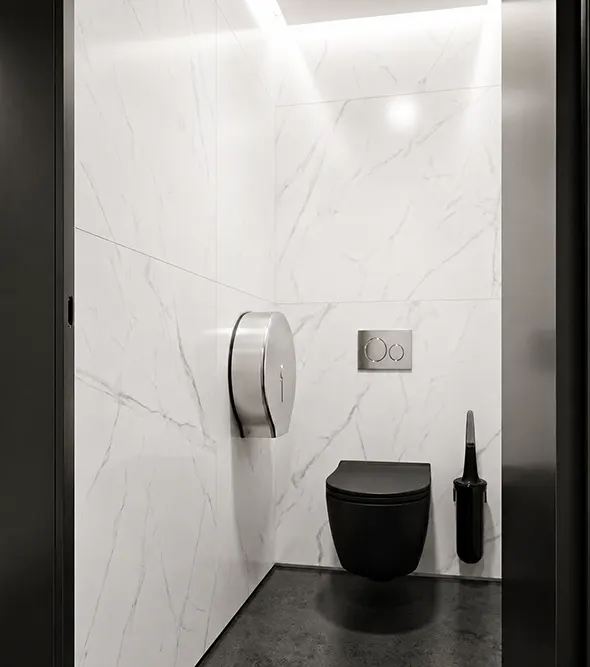
Stainless steel dispensers with rounded edges and concealed mounting mechanisms provide the best protection against vandalism involving paper products. Their solid construction makes them difficult to break or remove from the wall. The rounded design leaves fewer surfaces vulnerable to damage.
Equipment specification recommendations for high-traffic facilities, available at rotorbusiness.com, state that concealed screws without visible heads make unauthorized removal of dispensers even more difficult.
Which facilities face the highest risk of paper product misuse?
Commercial facilities with high user traffic and publicly accessible restrooms face the highest risk of paper product misuse.
These include:
- shopping centers
- gas stations
- hospitality establishments
- schools
- hospitals
- sports centers
- bus and railway stations
- office buildings with large numbers of employees and visitors
How does controlled dispensing reduce excessive paper product consumption?
Controlled dispensing reduces excessive paper product consumption by limiting the amount of material available each time someone uses the dispenser. The enclosed design prevents users from unwinding an entire roll at once. These dispensers also protect the material from moisture and dirt. This also reduces waste caused by damage. Fewer refills also mean less work for maintenance staff.
Misuse of paper products in commercial facilities – How much does it increase costs?
Misuse of paper products increases operating costs for commercial facilities through:
- higher material consumption
- more frequent dispenser refilling
- replacement of damaged equipment
- additional maintenance staff involvement
The level of these costs depends on the number of users, the frequency of misuse and the dispensing system in place. Enclosed dispensers with controlled paper dispensing can significantly reduce unnecessary consumption and maintenance costs.
Real-world experience: Shopping center in Novi Sad
- Problem: A shopping center in Novi Sad with high daily visitor traffic experienced frequent disappearances of spare toilet paper rolls, excessive paper towel consumption and occasional damage to plastic dispensers. Staff had to refill supplies several times a day, while paper product costs continued to rise month after month
- Solution: The facility installed locked high-capacity stainless steel dispensers for jumbo toilet paper and a stainless steel towel dispenser with controlled dispensing in all public restrooms. Staff removed spare rolls from the stalls and introduced regular dispenser checks instead of leaving additional supplies in visible locations
- Result: The facility significantly reduced paper product theft and the number of damaged dispensers. Paper consumption became more consistent, staff refilled supplies less frequently, and the restrooms remained tidier and better stocked for users throughout the day
Frequently asked questions about misuse of paper products in commercial facilities – FAQ
Does a higher dispenser capacity really reduce theft?
Yes, because it reduces the need for staff to keep spare supplies outside the dispenser in visible locations. Less exposed material means fewer opportunities for theft.
Do people steal more toilet paper or paper towels from commercial restrooms?
People steal toilet paper more often than paper towels from commercial restrooms. Staff often leave spare rolls in visible locations or outside dispensers, making them easy to take. Paper towels stored in enclosed dispensers are far less vulnerable to theft because users cannot access the entire supply.
Does paper product misuse affect hygiene in commercial facilities?
It has a direct impact because an empty or damaged dispenser leaves users without access to paper towels, toilet paper or seat covers. This lowers restroom hygiene standards and affects the impression a commercial facility makes on its guests. Preventing misuse protects both hygiene standards and the budget.
Does staff training help prevent paper product misuse?
Staff training helps because employees can recognize signs of misuse before costs increase. For example, unusually rapid consumption or damaged dispensers. However, training does not replace the right equipment; it complements it. Combining locked dispensers with staff who regularly monitor supply levels delivers the best results.
The most effective way to reduce paper product misuse is not stricter control of users, but a carefully selected system of dispensers and paper products. A well-designed solution delivers less waste, fewer staff interventions and a more reliable hygiene standard for every commercial facility.
About the author:
Milja Tonić – SEO Content Strategist & Copywriter
Milja Tonić is an SEO Content Strategist and Copywriter at LUU.rs, specializing in the creation of expert content on professional hygiene, paper products, dispensers and facility management.
The expert articles on this blog result from detailed research, an analytical approach and editorial work, while applying current SEO standards and best practices for Google Search and AI search (SGE/AI Overview).
Subscribe to the LUU newsletter and stay up to date with the latest offers.