
Table of Contents
The answer to the question why do guests expect paper toilet seat covers in restrooms lies in the fact that they see the restroom as a reflection of the entire hospitality service. When an establishment provides a visible barrier between the user and the toilet seat, it sends a clear message that hygiene and guest care are priorities. Even when the restroom is otherwise clean, the absence of this option makes guests question standards they cannot verify directly.
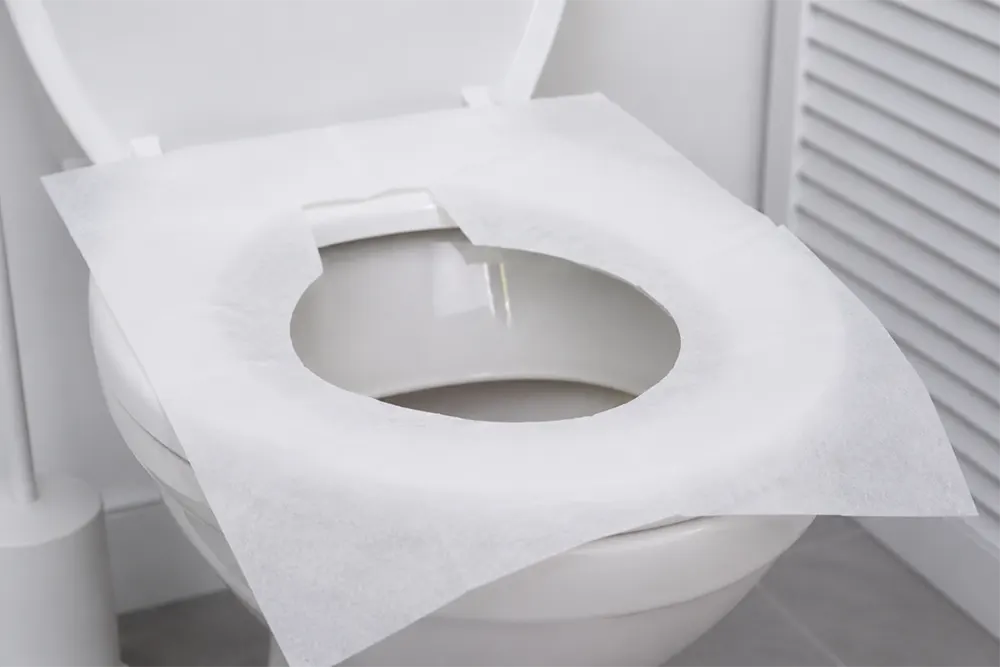
A paper toilet seat cover is a small but important sign of care that guests will appreciate. To learn how to place it correctly on a toilet seat, read our blog post: Paper toilet seat cover: A guide to placement and use.
What do global studies reveal about restroom cleanliness?
A global ISSA/Excel Dryer survey, conducted among more than 4,000 respondents in the US, Europe and Asia, reveals that all respondents agree: a dirty restroom negatively affects their impression of the entire establishment, while 80% stated that they would not or might not return to a restaurant with a dirty restroom.
A Datassential study adds that 90% of consumers consider cleanliness when choosing a restaurant, while 84% want to actively see the hygiene maintenance process.
Why does ordinary toilet paper fail to solve the problem?
An improvised toilet paper cover cannot replace proper maintenance of the toilet seat itself. The CDC states that users frequently touch restroom surfaces and often contaminate them, which makes proper cleaning the fundamental measure for maintaining hygiene in the space.
Why does the availability of paper toilet seat covers matter to guests?
An available paper toilet seat cover gives guests the option to avoid direct contact with the toilet seat. Even if guests do not use it, they know that an additional barrier is available if they want one. The dispenser therefore provides a visible convenience that supports personal comfort and gives users greater control when using the restroom.
How do dispensers meet this expectation?
Paper toilet seat covers come in packs of 200 sheets per dispenser, with 12 packs in each box, so one fully stocked dispenser provides users with up to 200 individual covers before it needs refilling. This solution directly meets the expectations identified in the research: it provides a visible, functional sign that the establishment takes hygiene seriously rather than treating it as a formality.
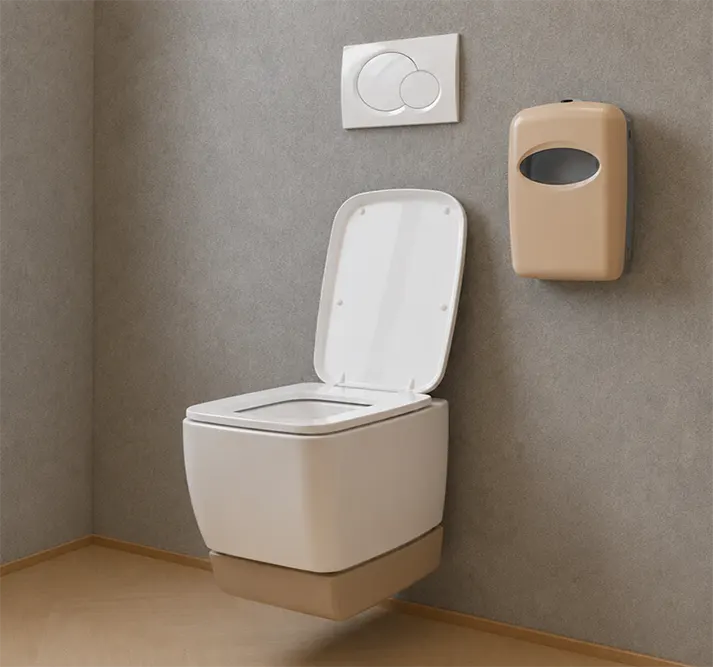
Table: Where do paper toilet seat covers make the most sense?
| Type of establishment | Typical restroom situation | Why the cover is practical |
| Restaurants | A large number of different guests throughout the day | Guests can place their own barrier on the seat before use |
| Hotels | Hotel guests and visitors use shared restrooms | This additional convenience enhances the restroom facilities |
| Cafés | Users change frequently, especially in busy locations | The cover is readily available, with no need to improvise with toilet paper |
| Conference and event venues | A large number of users within short periods | Individual covers allow for easy use in high-traffic restrooms |
| Banks and bank branches | Employees use the restrooms | It provides an additional option for avoiding direct contact with the toilet seat |
| Petrol stations and roadside restaurants | A high turnover of different users throughout the day | Users have access to a barrier without having to improvise with toilet paper |
Why do guests expect paper toilet seat covers in restrooms? – FAQ
Do hospitality regulations require paper toilet seat covers?
No specific regulation explicitly requires them, but hygiene standards in the HoReCa sector increasingly include visible protective measures in restrooms. Establishments introduce them as part of a broader hygiene standard because guests interpret the absence of visible measures as an oversight, even when the space is technically clean.
Where should you install a paper toilet seat cover dispenser?
You should install the dispenser inside the restroom cubicle, where users can easily reach it before sitting on the toilet seat. A practical position allows users to take a cover with one hand and place it without unnecessarily touching other surfaces in the cubicle.
Does installing a toilet seat cover dispenser increase restroom maintenance costs?
Not necessarily. Under the dispenser contract model, the supplier retains ownership of the dispenser and installs it free of charge, while the establishment only commits to purchasing supplies for 12 or 24 months. The supplier handles servicing and maintenance, limiting the implementation cost solely to the regular consumption of paper covers.
Is a paper toilet seat cover a better option than toilet seat disinfectant spray?
They do not serve the same function. A paper cover creates a physical barrier between the user and the toilet seat, while an appropriate disinfectant treats the surface according to the manufacturer’s instructions. You should therefore not present the cover as a substitute for properly cleaning and disinfecting the toilet seat.
You can recognise a well-equipped restroom by the details that make the space easier to use. Establishments can easily incorporate paper toilet seat covers into their existing hygiene systems by selecting a dispenser that suits their usage patterns and visitor volume.
If you are considering how to incorporate them into your existing restroom facilities and select a suitable dispenser based on visitor volume, we can find a practical solution together.
About the author:
Milja Tonić – SEO Content Strategist & Copywriter
Milja Tonić is an SEO Content Strategist and Copywriter at LUU. She works with the sales and technical teams to create content about professional paper products, dispensers and hygiene management in commercial establishments.
Subscribe to the LUU newsletter and keep up to date with the latest offers.