In every facility, the most expensive factors are lost minutes and inconsistent standards. The operational goal is simple: hands washed on the first try, a dry sink, and flow without interruption. This is where automatic dispensers come in, delivering a consistent dose of soap and a pre-cut paper towel, sheet by sheet. This reduces contact points, decreases bacteria, and lowers the risk of slipping and emergency staff interventions, while keeping the flow predictable both in quiet moments and during peak hours.
Below, we precisely map out where the problem begins and how automatic dispensers eliminate it, when to choose liquid versus foam soap, how the autocut system for towels works, and which LUU collections most quickly bring a stable standard to your space with easier procurement and simplified maintenance.
Related topics: Dispenser – A step-by-step guide to the perfect choice
Buy now, introduce automatic dispensers and ensure a safe flow.
+381 66 811 83 82
Where the problem arises and why automatic dispensers solve it?
Clogging begins at the sink and immediately spills over to hygiene. With manual/mechanical dispensers, the user touches the housing before washing, sometimes even after washing, and the dose varies—some press twice, some too hard, causing soap to end up around the edges of the sink. This adds time per user and creates additional contact points where bacteria can easily accumulate. On top of that, wet surfaces require more frequent wiping during operating hours, and until that is done, the risk of slipping is higher than it should be.
The second interruption occurs during hand drying. When the towel is not pre-cut, people instinctively pull more and grab multiple sheets. This results in more contact with the same surface, more waste around the sink, and slower throughput. From a hygiene standpoint, a shared contact point and excess paper returned to the holder do not help: bacteria have places to remain, and the space quickly appears untidy.
The third issue is maintenance and risk control
Small refills and a mix of different models lead to unplanned replenishment at the worst possible moments. Different keys and cartridges increase the chance of error. This slows down the team, and each oversight (an empty dispenser, leaks, incorrectly installed roll) directly affects both hygiene (more touching, more bacteria on surfaces) and movement safety (wet floor, higher risk of slipping).
When these points combine, you get the same outcome: slower sink flow, unpredictable consumption, more contact than necessary, and occasional safety risks. The system removes unnecessary touchpoints and reduces bacteria. It keeps the dose consistent and dispenses a single sheet each time. A unified standard ensures stable hygiene and safety every hour.
Related topics: How much does an unhygienic toilet cost? Hidden costs of poorly equipped toilet facilities
Let it be yours — the standard of one dose and one sheet throughout the entire facility.
+381 66 811 83 82
How automatic dispensers guide the user?
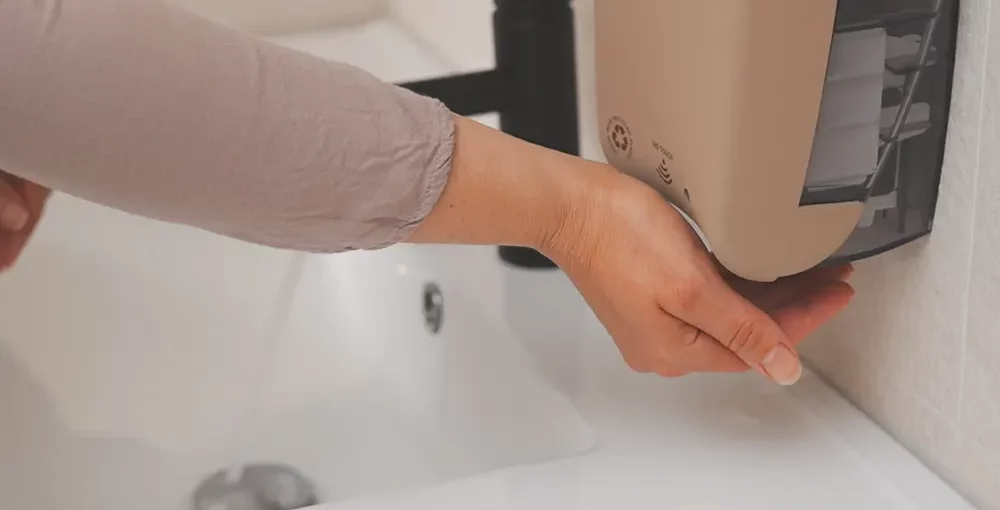
Automatic dispensers return everything to a single, simple action. The hand approaches the sensor and receives an equal, sufficiently rich dose without touching the housing and without needing a second one. The towel does not need to be searched for or unrolled. The autocut mechanism has already prepared a flat sheet, and the next one is ready for the next user.
Closed soap cartridges prevent leakage and contamination, and larger capacities shift refills from the worst moments to calmer hours. This makes the handwashing process predictable: hand, dose, rinsing, drying, one sheet, exit. When users move at this pace, crowds do not create blockages in front of sinks and stalls, and the space maintains a calm appearance even during the busiest times.
The greatest benefits of automatic dispensers are seen in places where the rhythm does not slow down: public restrooms in shopping centers and conference halls, cinemas and arenas, HoReCa venues during peak hours, offices with break-time waves, schools, clinics and laboratories where fewer contact points are required, and production and logistics environments where speed and predictability matter more than anything else. Everywhere the flow is fast, automatic dispensers restore control in the exact second it is needed most.
Related topics: Why a paper towel dispenser is more than “Just a box”
Order today – touchless soap dispenser (liquid or foam) + autocut, one routine for all.
+381 66 811 83 82
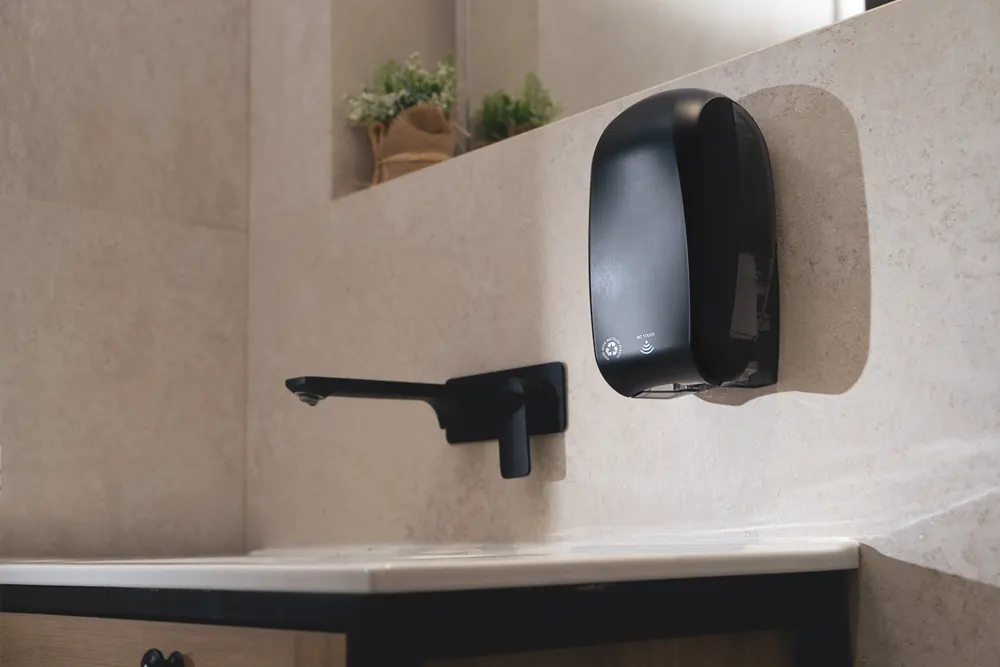
Which types of automatic dispensers we use
In practice, we need three clear setups to cover nearly all situations: automatic dispensers for liquid soap, automatic dispensers for foam soap, and an autocut dispenser for paper towels. The differences between them are not only in feel but also in dosing method, flow speed, and maintenance.
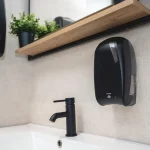
The touchless liquid soap dispenser delivers a stable, decisive dose and performs best where hands are truly dirty: kitchens, production, logistics, service areas. The electronic sensor recognizes the hand and releases the same amount every time, preventing “double pressing” or touching the housing. Closed cartridges reduce leaks and contact with the contents, and the level indicator through a small window prevents the reservoir from running empty at the wrong moment. The advantage of liquid soap is its ability to break down grease and heavier dirt more quickly. In practice, this means fewer repetitions and shorter time spent at the sink.
The touchless foam soap dispenser offers a different type of use: the dose is smaller per activation, but visually and tactily feels richer. Guests quickly notice the difference and gladly use foam soap.
This is why it’s common in hotels, healthcare, schools, and business environments. Here too, the sensor works instead of the user, so there are no shared touchpoints where bacteria can accumulate. The foam rinses easily and drips less over the edge of the sink, which means fewer staff interventions. When a space requires a premium feel with controlled consumption and a neat appearance, foam is the natural choice.
For paper towels, the best effect comes from autocut.
The principle is simple: the sheet is already cut and waiting for the next person. There is no grabbing the roll, no pulling long strips, and no “handful of paper.” The user takes one sheet, and the next remains ready. This directly affects the two things that most often create problems: line speed and the number of touches on the same surfaces. Autocut is especially useful in places with constant foot traffic because it standardizes the action — every pass looks the same and lasts the same. With a closed housing and a lock, maintenance becomes predictable, and refills can be planned outside peak hours.
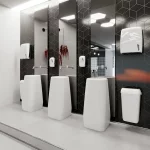
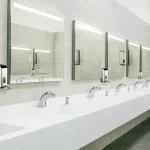
All three setups work as a system only when they are correctly installed and aligned. The sensor height must detect the hand moving toward the water stream. The autocut must be close enough for a single, smooth motion. Cassettes from the LUU Rock, Nero, Blanc and Ramel collections maintain the visual standard. When the automatic dispensers for soap and the autocut for towels are placed in the right position and set to the right dose, you get what matters most for hygiene and safety: fewer unnecessary touches, fewer bacteria, fewer spills and slippery spots, faster movement, and a clean sink without additional interventions during work.
Related topics: Dispensers in commercial buildings – a detail that changes the impression (and the cost)
Align all points – soap and towel dispensers from the same collection (Rock/Nero/Blanc/Ramel), one routine for the team. +381 66 811 83 82
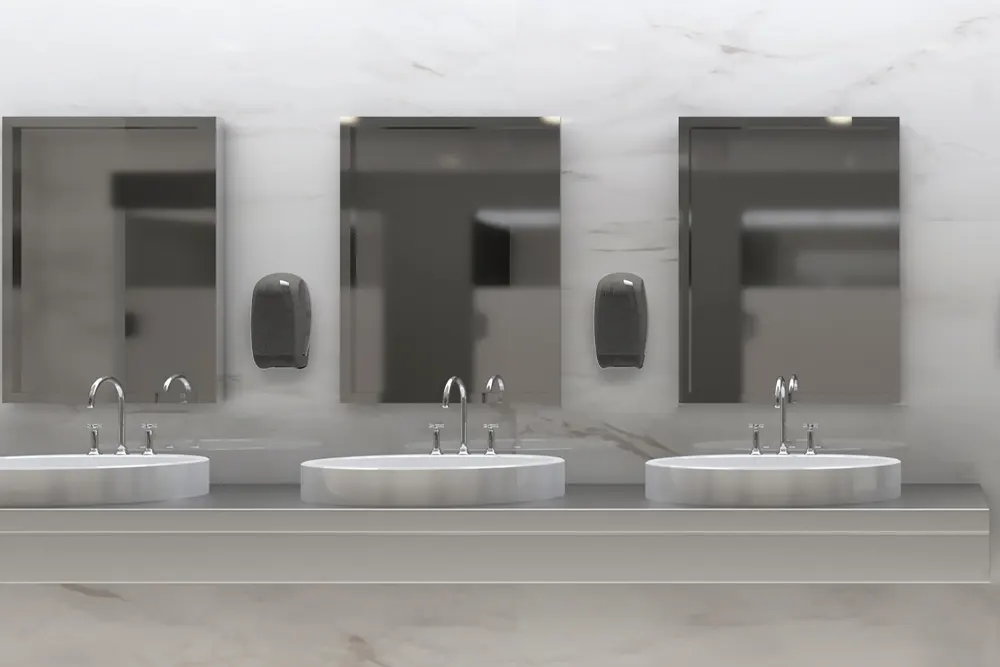
How the introduction of automatic dispensers looks without effort
We do nothing big — only well-organized work. First, we measure the rhythm: when the crowds form, how long they last, and exactly where the flow slows down. Then we walk through the space and map the natural places for automatic dispensers, ensuring that the hand instinctively goes where it should. You quickly receive a proposal showing the right soap type, autocut model, and matching LUU collection. It also specifies the correct installation heights for every dispenser. Installation is planned so the restroom remains functional, and staff receive brief training for refilling and visual checks. The goal is clear: when the automatic dispensers are placed in the right position and set to the right dose, everything works the same regardless of whether it is 10:00 or 10:20.
Related topics: It’s time for a new generation: Dispensers that speak on behalf of your space
Choose and schedule installation in one step. +381 66 811 83 82
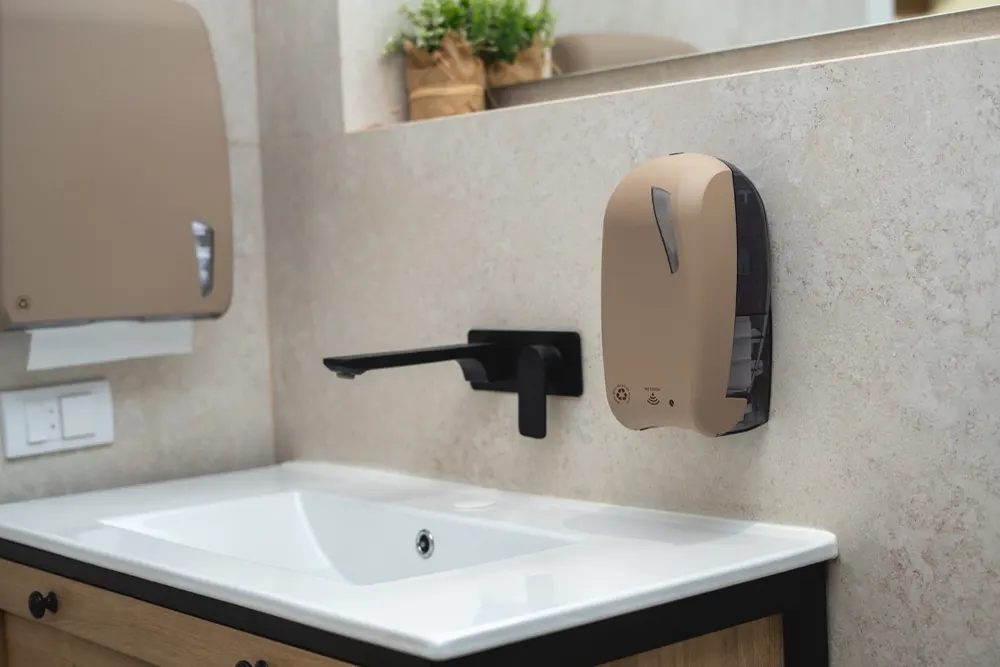
Dispensers as proof of standards
When you want order, hygiene and safety to be taken for granted, automatic dispensers are the shortest path to that result. A consistent touchless dose of soap and one pre-cut sheet shorten every action, reduce contacts, reduce bacteria, and keep the sink dry and ready for the next user. The restroom stops being a weak point and becomes a consistent part of what your brand promises – here, it is always clean, tidy and safe.
The LUU approach goes a step further: function and design work together. Touchless dispensers in liquid or foam and autocut towel systems come in the Rock, Nero, Blanc and Ramel collections.
They follow the interior design, so the equipment blends into the space instead of disrupting it. The result is a standard that is easy to maintain and simple to explain to the team.
Users recognize it through faster flow, safer movement, and consistency at the sink.
Related topics: Dispensers – A system that optimizes consumption and enhances user experience through a superior level of hygiene
One dose. One sheet. One decision. Schedule installation of automatic dispensers without interrupting operations. +381 66 811 83 82
One dose. One sheet. One inbox.
Receive practical advice on how to shorten the path to clean hands and a dry sink, without delays.
Sign up for the LUU newsletter.