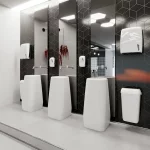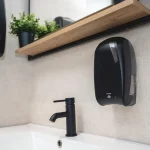

The dental office is a place of precision. Everything is measured in seconds, and trust is built in silence. The patient in the chair sees the light, the instrument, and the steady hand. What they do not notice are dozens of small habits that make every movement look effortless. Between two breaths and the word “open,” the space must remain dry, clean, and calm. This is where paper stops being an ordinary thing. When dental bibs do their job flawlessly, the workflow stays straight as a guide, the surface is wiped in one motion, hands do not change angle, the assistant completes the gesture without returning. Nothing is explained, yet everything is under control.
In the following, we show where slowdowns occur, how LUU frames the solution, and how it is practically implemented in your offices without philosophy, only results.
Related topics: Seamless and no-compromise industrial and warehouse dispensers
Call our team and let’s align dispensers and formats for your schedule. +381 66 811 83 82
Dental bibs, what disrupts the rhythm in practice?
The first crack usually appears on the surface that should shine after wiping. It’s not dramatic, just a watery mark that requires another stroke. If dental bibs lack capillary strength, moisture spreads instead of being removed.
On trays, it looks like a dull film that ruins reflection, and on glass, like a shadow that won’t disappear. At that moment, the assistant changes pressure, adjusts the angle, goes back, and continues. Two seconds here, three there—the flow is already different.
The second point is texture. Paper that breaks under the fingers leaves invisible details that later become very visible: a fiber on the dental lamp, a whitish crumb on the holder, a spot on the instrument table persistently asking for another pass. These aren’t technical errors, they are aesthetic disturbances. The patient can’t tell why, but the space feels untidy.
The third factor is aerosols. With the rhythm of turbines and ultrasound, tiny droplets land everywhere you don’t want them. If the paper isn’t ready to pick them up at first contact, you get spotted drying and another round of cleaning. This isn’t just a question of hygiene—it’s a question of flow. While catching what could’ve been gone in the first stroke, the next patient is already reaching for the armrest, and you’re half a minute behind schedule.
A dispenser that changes the rules – technically and figuratively describing the problem
The fourth symptom is consumption without pattern. A dispenser that releases two sheets, needs a stronger pull, or both hands, forces the team to adapt instead of work. In one office, the paper “flies,” in another, it stands still. The bin in one office is full, in another half-empty. Procurement can hardly estimate real needs, and the mood at the end of the shift depends on the bin, not the schedule. Dental bibs then are not a tool, but a lottery.
The fifth, often underestimated element, is wall placement. When placed “where there was space,” the hand crosses the body, the wrist bends, the doctor changes support and loses rhythm. The sheet isn’t where the eyes naturally fall or where fingers expect to grab, so there’s a small jerk before every wipe. During the shift, that turns into dozens of unnecessary moves, slower work, and that end-of-day fatigue that seems to appear for no reason.
And finally, supply changes. Every random replacement brings a different paper character—a different absorption capacity, a different wet strength, a different mark on glass. When change becomes routine, the standard depends on who’s present that day, not on the system that should function regardless of who’s on duty.
Related topics: Paper towels quietly drain your budget – Learn how to turn it to your advantage
Call LUU and request an offer with a refill plan and expected consumption. +381 66 811 83 82
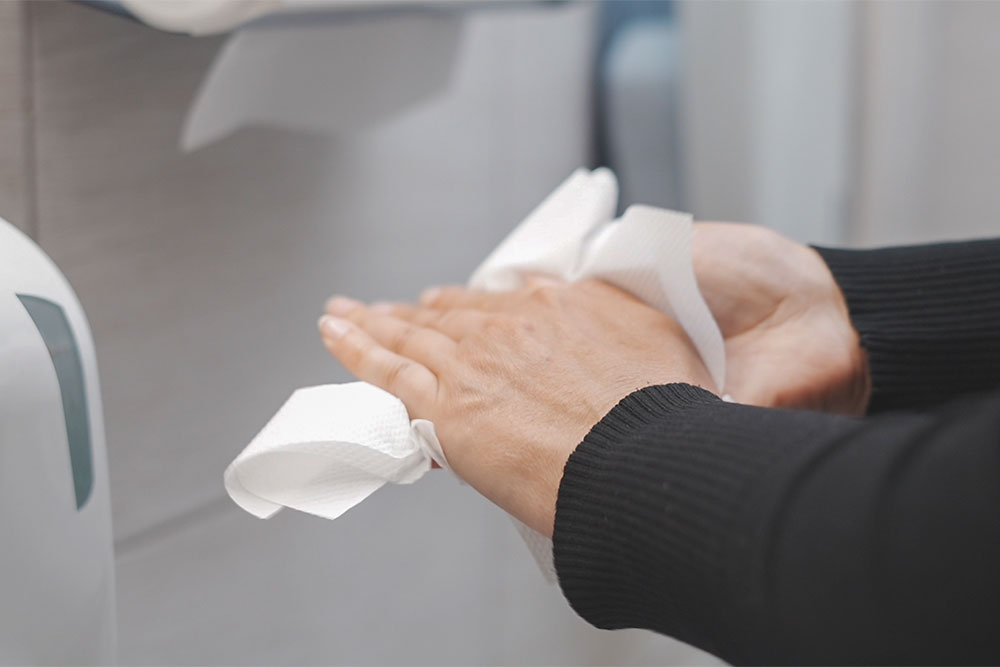
Dental bibs, why LUU starts from the gesture, not from the catalog
LUU does not start from price or from a list of items, but from the movement of the hand. In every room we observe three things: where moisture most often remains, in what order surfaces are wiped, and how fingers reach the paper while instruments and eyes are occupied. Only when we see that “film” do we choose dental bibs that follow the workflow instead of limiting it.
The essence lies in three qualities. First, absorption power that does not smear. Paper must pull moisture toward itself and do so without a return stroke. Second, stability when wet: the sheet must not turn into pulp when it touches disinfectant or the edge of a tray with leftover water. Third, a clean surface after contact: no fibers, no lint, no marks on metal or glass. When these three things happen in one motion, the gesture becomes short and precise, directly shortening the time between patients without speeding up.
When the dispenser becomes an instrument – highlighting the shift from an ordinary item to a tool
We treat the dispenser as an instrument, not as a holder. If the sheet does not come out consistently—always one, with the same force, at the same angle—the hand’s habit breaks. That’s why we insist on simple paper release and a closed housing that protects the stack from aerosols. The viewing window on the dispenser must indicate the fill level without opening it, and refilling must be done in one motion, without pouring. When these conditions are met, dental bibs become as predictable as the probe you use—always the same resistance, always the same feel.
Design listens to the frame. You don’t need color that “shouts.” The housing should blend into the environment, matching the light and materials. Aesthetics in dentistry are not decoration—they are part of how a patient decides to trust. A discreet dispenser sends the message that everything is thought through, even the things no one comments on.
Logistics close the story. If refilling requires tools, an improvised funnel, or “that one person who knows how,” the system has already failed. Refilling must be safe for uniforms, quick within the rhythm of a break, and clear for everyone. When that happens, dental bibs stop surprising you, and the stock finally starts to resemble a plan instead of guesswork.
Related topics: How smart use of paper supplies can save your business money
Contact the LUU team and let’s turn your workflow into a standard that works from the first try. +381 66 811 83 82
Dental bibs, how LUU makes the space look flawless
The first step is short—during one shift, answer three questions.
Do you reach for the paper without changing body position, does the surface remain clean after one stroke (without lint or film), and does the dispenser always release one sheet at the same angle?
If any answer is “no,” that’s where your time and rhythm are leaking.
The second step is format selection. In offices where the tray and auxiliary surface are wiped often, we choose a sheet that absorbs water in one contact and stays whole. Where you work with a lot of reflection and want crystal-clear glass and spotless devices, we pick paper that leaves a neutral surface after a stroke, without “fog.” If you often use stronger agents, we go for higher wet strength. In practice, this means that dental bibs are not a single universal model, but a set of carefully chosen variants placed where their qualities bring the most effect.
The third step is reach ergonomics. We position the dispenser so that fingers reach the sheet without rotating the torso and without breaking visual contact with the work field. If you lean on your left leg, the height will differ from when you stand with the right shoulder forward. If the assistant stands closer to suction, the pulling angle must match that position. This “geometry” doesn’t need explaining to the team—it just makes the hand smile the first time it reaches. When that happens, the habit forms on its own.
Control without complications – emphasizing efficiency and ease
The fourth step is a simple stock plan. No table with twenty fields. Three are enough: how much enters the office per shift, when the level is checked, and what the safe minimum in storage is. When that fits on one sheet of paper (we love irony, but it works), refilling stops being an issue. In two to four weeks we check: what the consumption per room is, whether somewhere sheets go faster than they should, whether there are “hungry” offices. If consumption still fluctuates, we look for the cause in movement, not in “one more piece.” Sometimes the solution is completely unexpected—changing the pulling direction or rearranging a drawer so the hand stays free.
The fifth step is fine-tuning. When the numbers settle, we listen to the team’s feeling. If somewhere “it still bothers,” we change the paper weight or switch to one that gives a drier finish. If aesthetics call for a quieter housing, we change the final color. The goal isn’t to bring perfection to the lab, but calm to a real day. When the doctor at the end of the shift says, “I don’t know what you did, but it feels easier,” we know that dental bibs have become part of the standard, not a topic of discussion.
Related topics: Dispensers in commercial buildings – a detail that changes the impression (and the cost)
No theory, just a plan. Call us to align dental bibs perfectly. +381 66 811 83 82
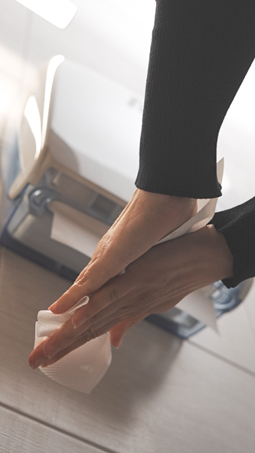
Dental bibs, the final step that makes a difference
When three simple things align—paper that absorbs without smearing, dispensing that gives one sheet without surprises, and placement that follows the hand—the office gains extra minutes without any “rushing.” Dental bibs are no longer a consumable line in a table, but the reason why the shift doesn’t lag, why the patient sees a clean scene without traces of previous work, and why the team keeps its focus. Calm isn’t poetry—it’s a measurable effect seen in shorter breaks between patients, slower-filling bins, and minds not wondering “where it went wrong.”
The best offices aren’t those that hide mistakes but those that prevent them. In them, wiping has no drama—it has results. The surface doesn’t need another pass, the handle doesn’t show fibers, the glass doesn’t fog, the dispenser doesn’t demand two fingers and a body twist. Everything is short and precise. That’s the whole point when dental bibs enter the system instead of floating in habits.
If you want to feel the change before you describe it, send us your room layout, briefly describe the hand path, and tell us your hourly rhythm. We’ll return a simple proposal showing which paper variants go where, how the dispenser should “sit” on the wall so the hand always finds it, and how refills become something that just happens, unnoticed. After a few weeks, when you realize the pace is the same but the effort is lower, you’ll know you’ve crossed the line between “we have paper” and “we have a standard.”
Related topics: Tissue paper products: Discover How to Turn Them Into a Competitive Advantage
Send us a short description of your office and get a LUU proposal for dental bibs with a clear refill plan and expected consumption per patient, ready for smooth implementation.
Sign up for our newsletter and turn paper into an advantage. Every month, a clear plan arrives—ready to apply immediately.