
Table of Contents
In a world where hand hygiene has become the number one priority, the selection of restroom equipment is no longer merely a matter of aesthetics, but a strategic decision. Whether you are outfitting a luxury restaurant, a busy office, or seeking to elevate standards in your own home, a soap dispensers is the element that makes the difference between an average and a superior user experience.
In this guide, we will go through all aspects – from materials and mechanisms to hidden maintenance costs – so that you can make a decision that will save you both money and time.
Soap dispensers – Why is switching to professional dispensers essential?
Many wonder why they should invest in wall-mounted dispensers instead of using ordinary soap bottles. The answer lies in three key factors: hygiene, cost-effectiveness, sustainability, design, appeal.
Maximum hygiene and prevention of contamination
Ordinary soap bottles placed on the edge of a sink often become breeding grounds for bacteria. Every time someone touches them with unclean hands, microorganisms are left behind. Professional dispensers, especially sensor-operated models, eliminate this risk. They ensure that the user receives soap without any physical contact with the device.
Drastic cost reduction
When using ordinary bottles, users often take more soap than necessary. Professional dispensers are calibrated to dispense exactly the amount of liquid (or foam) required for a single wash. Based on a sample of 100 visits per day, soap savings can reach up to 37% on a monthly level.
Environmental awareness and reduction of plastic waste
At a time when sustainability is no longer a choice but an obligation, professional dispensers play a crucial role in environmental preservation. By using dispensers, you drastically reduce the number of single-use plastic bottles that would otherwise end up in landfills. One wall-mounted dispenser can last for years, replacing hundreds of small packages. In this way, your facility not only saves money but actively reduces its carbon footprint. By using dispensers with large reservoirs (so-called “bulk” refills), you significantly reduce the amount of plastic waste. Instead of dozens of small bottles, you purchase one large 5-litre package, thereby directly contributing to environmental protection while simultaneously lowering procurement costs.
Design that transforms the space
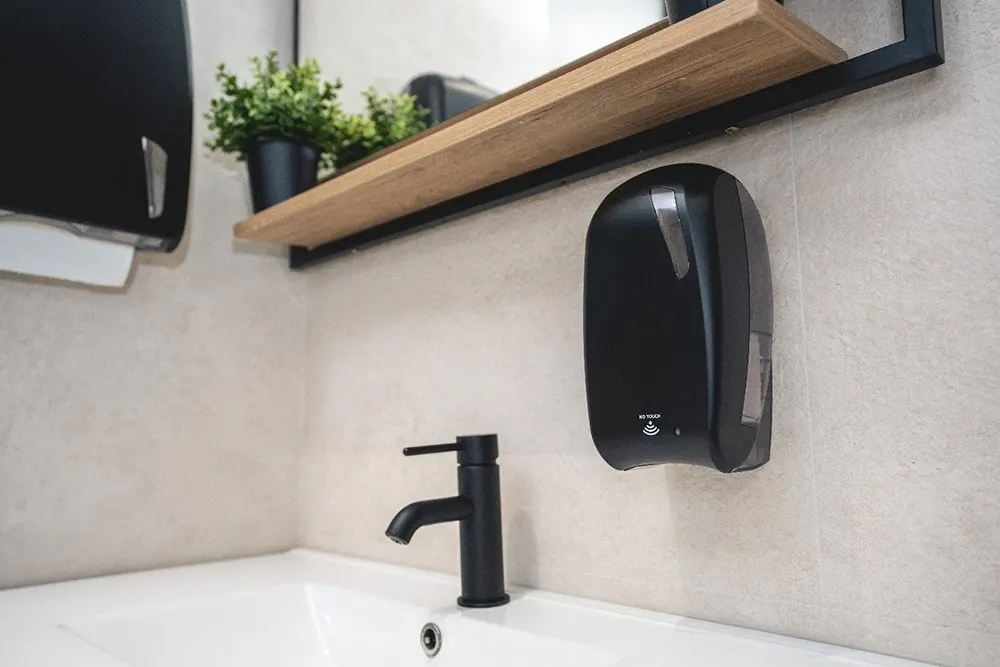
The interior of a restroom often says more about a brand than the sales area itself. Ordinary soap bottles, soap in a doser or in a poor-quality dispenser made of flimsy plastic that creaks under the hand and often comes in different colours and shapes, create visual clutter and convey an impression of improvisation. Professional dispensers, with their clean lines and unified appearance, contribute to minimalism and order. Whether you choose a matte black finish for a modern industrial style or polished chrome for classic elegance, these devices become an integral part of the architecture of the space, rather than a mere accessory.
The appeal factor: An impression that lasts
User psychology is clear – details build trust. When a visitor enters a restroom and sees a modern, stable, and functional dispenser, they subconsciously project that level of meticulousness onto your entire business. That “wow” effect, achieved through flawless sensor performance or a quality Inox touch, creates a sense of luxury and care for the guest. People appreciate spaces where everything functions smoothly; such spaces are remembered, recommended, and gladly revisited by clients.
Types of dispensers – Which mechanism best suits your needs?
Not all dispensers are the same. The choice of mechanism directly affects how long the device will last and how satisfied users will be.
Manual push dispensers
This is a “classic” that never goes out of style. They operate on the principle of a pump that the user presses.
- Advantages: No batteries required, exceptionally durable and easy to repair.
- Ideal for: Schools, factories, and places where durability is a priority.
Automatic (sensor) dispensers
The future of hygiene. An infrared sensor detects the hand and automatically dispenses soap.
- Advantages: Zero contact rate, modern appearance, leaves a strong impression on clients.
- Ideal for: Hotels, high-end restaurants, and medical institutions.
Materials that make the difference: ABS plastic versus Inox
When selecting a device, the housing material determines its resistance to wear and vandalism.
ABS plastic – Flexibility and design
Modern ABS plastic is highly impact-resistant and does not yellow over time. These dispensers often feature a transparent window, allowing staff to check the soap level at a glance without opening the device.
Inox (Stainless steel) – Unmatched strength
For facilities facing extremely high foot traffic, Inox dispensers are the only proper solution.
- Anti-vandal design: Inox housing is almost impossible to break or forcibly open.
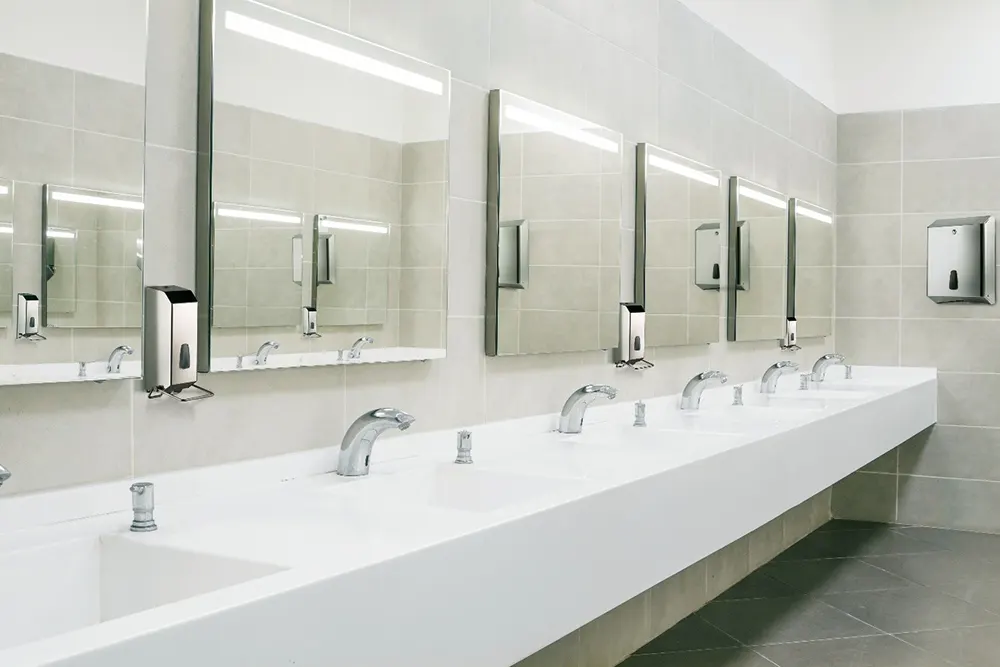
- Aesthetics: They provide that “luxury” feel to any restroom.
Soap dispensers – Liquid soap or foam soap?
This is an ongoing debate among facility managers. Although both types clean hands equally effectively, the experience is entirely different.
- Liquid soap: A richer texture, often containing more moisturizing ingredients. Ideal for places where you wish to provide a sense of care.
- Foam soap: The dispenser mixes soap with air to create a rich foam. Users consume less water because it takes less time to rinse off the foam, and the refill itself lasts significantly longer.
Positioning and installation: Where should the dispenser be placed?
Proper installation extends the lifespan of the device and prevents unnecessary mess.
- Height: The standard recommendation is 15–20 cm above the sink.
- Distance from the sensor: If installing a sensor model, avoid locations where reflections from glossy surfaces (such as mirrors or chrome) may activate the sensor by mistake.
- Accessibility: Ensure there is sufficient space around the dispenser for easy opening with a key for refilling.
Maintenance that prevents malfunctions
The greatest enemy of a dispenser is dried soap that can clog the pump.
- Regular rinsing: Once a month, rinse the reservoir with warm water.
- Soap quality: Use soaps intended for dispensers. Excessively thick soaps or those containing granules may permanently damage the mechanism.
Soap dispensers – An investment that pays off
A quality dispenser is not merely a soap container; it is the business card of your facility. It reflects how much you care about the health of your employees and the comfort of your clients. By wisely selecting the material and mechanism, you will transform your restroom into a space that radiates cleanliness and professionalism.
Looking for a solution that combines style and durability?
Explore our complete range of professional hygiene equipment. Our experts are here to help you choose models that best match your budget and visitor frequency.
CLICK HERE AND VIEW OUR OFFER AT LUU.RS/EN
Related topics that may interest you
To fully equip your space and learn more about specific solutions, read our following texts:
Subscribe to the LUU newsletter and stay up to date with the latest offers.