Table of Contents
This guide: Dispensers and paper products gives you a complete insight into how the hygiene systems industry operates and how to establish a standard that lasts.
Hygiene in commercial facility restrooms is often only noticed when something goes wrong.
An empty paper towel dispenser.
Soap that ran out an hour ago.
Toilet paper that was used up in the middle of the workday.
At that moment, users of the space do not think about logistics, suppliers, or consumption. They see only one thing: The organization does not uphold basic hygiene.
Dispensers and paper products in commercial facilities encompass dispensers, paper products, and consumption control systems that directly impact hygiene, costs, and the user experience of a space.
That is why dispensers and paper products are not consumables
They are part of the everyday experience of employees, clients, and visitors, and an indicator of the level of organization.
What you will learn in this guide:
- how to reduce hygiene costs by up to 40%
- how to standardize equipment and avoid operational chaos
- how to enhance user experience through design and functionality
- how to choose a system that works in the long term
Hygiene is not a cost – it is reputation.
An empty dispenser is not a mistake – but a signal of a poor system.
| Traditional model | Luu B2B model |
| Purchase of dispensers (high cost) | 0 RSD investment in equipment |
| Ad-hoc procurement of paper (time-consuming) | Contracted, regular supply |
| Uncontrolled consumption (waste) | Dispensing control systems (Up to -40% cost) |
| Different brands (visual inconsistency) | Unified Luu design (+ modern and unique dispensers in stone and sand color textures) |
Dispensers and paper products – Architecture: The aesthetics of invisible functionality
In contemporary architecture, hygiene systems such as dispensers represent an integral part of design, as they directly influence the aesthetics, functionality, and user experience of a space.
The architecture of a modern building does not end at the facade or a grand lobby. It lives in its most intimate and most frequently used areas. Restroom spaces are a reflection of the architect’s respect for the user and a subtle indicator of the overall quality of the project.
In modern planning, dispensers are no longer elements added afterward that disrupt the visual identity of a wall – they are an integral part of interior architecture. We are speaking of clean lines, premium materials such as brushed steel or high-quality polymers that blend seamlessly with the environment.
Minimalism as a functional imperative
Minimalism here is not merely an aesthetic choice, but a functional imperative. A decluttered space provides the user with a sense of calm and security, while clearly defined elements guide intuitive movement through the space.
Ergonomics and user experience
Proper integration of hygiene systems implies consideration of every movement – where the hand naturally goes after washing, how light affects the perception of materials, and how sound integrates into the acoustics of the space.
Operational efficiency behind the design
Properly integrated dispensers reduce the need for maintenance, optimize material consumption, and contribute to a stable hygiene standard.
We do not sell paper boxes – but an architectural element that preserves the integrity of the design and elevates the standard of the space.
Through our contract supply model, premium dispensers become part of your standard, without initial investment and without additional burden on your Capex (capital expenditures).
In modern facilities, hygiene systems are not an addition – they are a standard that defines the quality of the space. Investment in premium restroom architecture does not only impact aesthetics – it directly increases the market value of the entire facility.
The level of a space has always been measured by its care for basic human needs.
By investing in properly integrated hygiene systems, you are not just purchasing dispensers – you are elevating the standard of the space. You provide users with a sense of safety, aesthetics, and ensure that hygiene becomes an integral part of design. This is long-term value that directly impacts the perception and market value of the facility.
Special facilities
Special facilities require hygiene systems tailored to specific conditions of use, risk levels, and operational constraints, as standard solut
ions are often insufficient.
There are spaces where standard solutions simply do not work. Special facilities, from private clinics to highly secured government institutions, require hygiene infrastructure designed for specific risk scenarios and usage intensity. Here, design must respond to function, and aesthetics must follow durability.
Durability and security in demanding conditions
In facilities with an increased risk of vandalism, dispensers must be resistant, with reinforced casings and concealed locking mechanisms, without compromising professional appearance.
Customization and invisible functionality
In luxury and “boutique” spaces, the focus is on complete integration into the environment, silent operation, and visual discretion. Here, hygiene systems become part of the spatial experience.
Operational stability and uninterrupted logistics
Special facilities often have restricted access or remote locations, which requires systems that can operate for extended periods without refilling, while maintaining a high level of hygiene.
In such conditions, hygiene systems must ensure continuity of operation without interruption, as any downtime directly affects the functioning of the facility.
Dispensers and hygiene systems in special facilities are not merely a matter of cleanliness – they are a matter of safety, prestige, and operational stability.
We analyze the microclimate of the space and the dynamics of user movement in order to create a solution that is not merely installed, but fully adapted to the function of the facility.
When working with special facilities, you do not choose a product from a catalogue – you implement a system that solves a unique challenge of a space that does not accept compromise.
In specialized facilities, hygiene is not a luxury but a safety standard. By integrating tailored systems, your organization ensures continuity of operations, maximum user protection, and a professional appearance of the space, without compromise between aesthetics, functionality, and security.
Dispensers and paper products – ROI: An investment in standards, not a material cost
Efficiency per sheet, not per roll The key to ROI is not in the cheapest roll of paper, but in the cost per single use and total operational costs. Our systems control dispensing “sheet by sheet”, reducing unnecessary waste. The Luu ‘sheet by sheet’ control system reduces paper consumption by up to 40%. This means your monthly consumables invoice becomes a fixed and predictable item, rather than a bottomless expense. When a user cannot pull out ten sheets at once, you directly save resources, reduce refill frequency, and minimize waste.
Labor savings and team efficiency
High-capacity smart dispensers enable staff to spend less time checking and refilling, and more time on actual sanitation. Fewer interventions mean lower labor costs and higher team productivity.
Indirect ROI: employee health and business continuity
Reducing the spread of infections among employees lowers the number of sick days, which represents significant savings for companies. Investment in high-quality systems means fewer breakdowns, longer equipment lifespan, and cost control, not just the purchase of paper and soap.
By investing in hygiene systems that redefine standards, companies do not only save money – they build a profitable, healthy, and operationally optimized work environment.
Investment in smart dispensers and “sheet by sheet” control means predictable costs, reduced waste, and greater ROI through savings in resources, labor, and sick leave. This is not just about paper and soap, but about an optimized work environment and long-term profitability.
Traditional procurement vs. Luu B2B model
| Traditional procurement | Luu B2B model |
| High initial investment: Purchasing each dispenser burdens the budget | 0€ initial cost: Professional setup and installation free of charge |
| Chaotic consumption: Employees use excessive paper without control | Smart solutions: “Sheet-by-sheet” consumption control reduces paper usage by up to 40% |
| Operational burden: Constant stock checks and manual ordering | Continuous supply: Automated supply through contractual obligation |
| Visual inconsistency: Different models disrupt the aesthetics of the space | Luu design: Unified appearance of the entire facility, modern and professional |
Paper products: A small detail that controls costs and experience
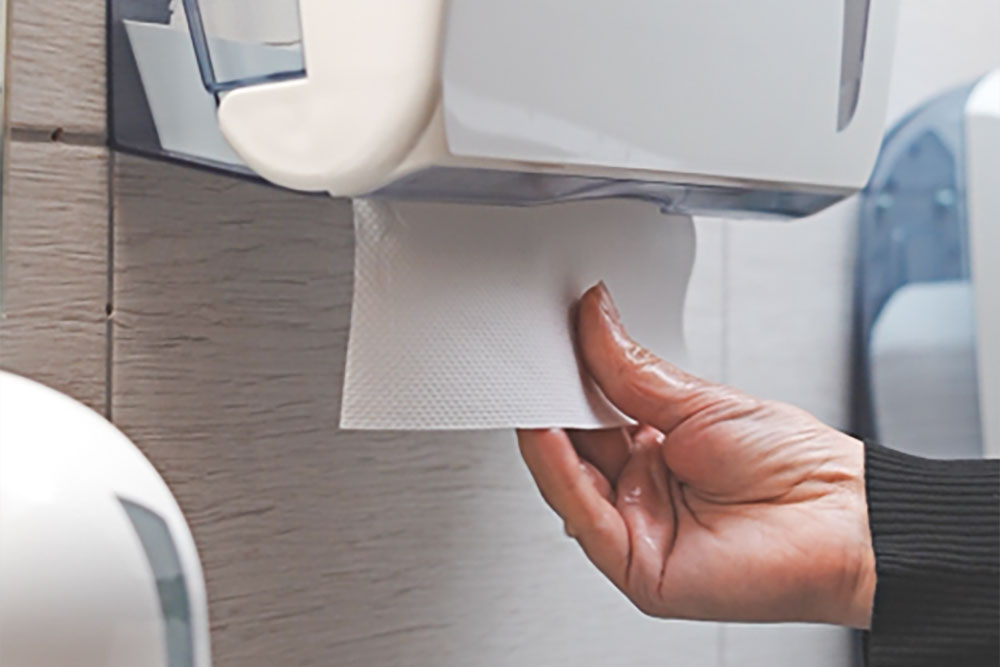
Paper products are the only point in a space where the user establishes direct, physical contact with the quality of your brand. After washing their hands, the towel or paper confirms a sense of luxury and care – or, conversely, mediocrity.
Paper is not just a raw material – it is fiber technology
Premium cellulose provides superior absorbency: one sheet is enough for hands to be completely dry. Less paper means ecology, economy, and cost control. The texture, strength, and softness of the paper send a strong subconscious message about the standard and image of the facility.
Tactile marketing in every touch
In a world where experience is everything, cheap recycled papers that tear and stick to fingers damage your brand image. Our paper products function as a silent ambassador of quality: each sheet is designed to be intuitively accessible, minimizing contact and preventing cross-contamination.
Hygiene and luxury in a single step
Whether it is sheet-based toilet paper or roll towels, every segment is optimized for maximum hygiene and a pleasant user experience. The user touches only the sheet they use. Clean, sterile, and comfortable.
ROI through paper products
By choosing premium paper products, you choose cost control, hygiene preservation, and elevation of brand standards. It is tactile marketing that builds trust, leaves a lasting impression, and sets standards that competitors struggle to match.
By choosing premium paper products, companies do not choose only a product. They choose the perception and trust of their users. Every sheet of paper becomes a silent ambassador of quality, while proper distribution and hygienic control ensure waste reduction and increased user satisfaction.
Dispensers and paper products – Soaps
Soaps are a central element of every hygiene protocol, but their role goes beyond mere removal of impurities. A proper hygiene system affects health, user experience, and the operational efficiency of a space.
Foam technology: less water, more hygiene
Modern Luu systems use foam technology, which significantly reduces water and soap consumption per wash. Foam rinses off more easily, requires less liquid, and provides a richer feeling of cleanliness, making handwashing more efficient and pleasant.
Formulation that protects the skin and eliminates pathogens
Our soaps are relentless against bacteria and viruses, yet gentle on the skin’s lipid barrier. In a world where frequent handwashing is the norm, proper skin care prevents irritation and microcracks that can serve as entry points for infections.
Safe soap delivery
Closed cartridges eliminate the possibility of environmental contamination, which is a common issue with “bulk” systems using open reservoirs. Every drop of soap is fresh, safe, and ready for use.
Neutral scents and user experience
Fragrance notes are carefully selected: neutral or lightly refreshing, contributing to the environment without disrupting sensory balance. Handwashing becomes a moment of self-care and raises awareness of health in shared spaces.
Diverse soaps for every scenario
In addition to standard foam, Luu also offers medical, bio, and specialized soaps, tailored to the needs of different facilities and purposes.
By investing in modern Luu soaps and hygiene systems, you do not just purchase soap – you create a safe, healthy, and premium experience for users of the space, while reducing operational costs and infection risks.
By investing in modern soaps and hygiene systems, a space gains safety, efficiency, and a premium experience for every user. Every touch of soap becomes part of health care, while closed cartridges and optimized formulations guarantee safety and equipment longevity.
Education: Knowledge as a tool for prevention
Education in hygiene is not just information _ it is a strategic process that transforms habits across the entire organization. Proper knowledge of employees, management, and end users directly impacts cleanliness, health, and the operational efficiency of a space.
A comprehensive approach to microbiological safety
Dispensers and paper products systems and this guide demonstrate how education enhances top-tier equipment. Educated staff understand the difference between cleaning and disinfection, becoming the first line of defense against the spread of infections. When a team understands why regular cartridge replacement is important and how dispenser ergonomics affect speed and efficiency, the entire organization achieves a higher ROI through reduced maintenance costs and operational downtime.
The end user as a partner in hygiene
Visual signals and intuitive dispenser design guide users toward proper usage: the recommended 20 seconds of handwashing with an adequate amount of soap and paper significantly reduces the spread of pathogens. The dispenser becomes an active educational tool, not just a functional element.
Prevention is the most effective “remedy”
Focusing on knowledge and proper use of equipment results in fewer illnesses, reduced absenteeism, and decreased operational downtime. Education transforms basic hygiene into a high standard of living and working, elevating the culture of health throughout the organization.
By investing in education and premium hygiene systems, companies do not just purchase equipment – they create a safe, healthy, and productive work environment where every employee becomes an ambassador of standards and hygiene.
Through educating employees and end users, hygiene moves from a merely obligatory action to a high standard of behavior. Knowledge becomes a tool that reduces sick leave, optimizes operational processes, and elevates the culture of health across the organization, making the investment in equipment maximally efficient.
Dispensers and paper products – Hospitality
In hospitality, the restroom is a place that can either undermine or reinforce the reputation of a restaurant or hotel. Premium food and impeccable service can easily lose their value if a poorly maintained restroom sends a message of neglect.
The restroom as an extension of the experience
At Luu, we view the hygiene space as an extension of the restaurant floor or hotel room. Here, hospitality is measured through availability, scent, and tactile sensation. Dispensers must be fast, silent, and aesthetically aligned with the interior, providing continuity of luxury.
Premium experience in every touch
When a guest enters a restroom and encounters a contactless system that delivers premium soap and soft, absorbent paper, they feel that the host has considered every detail of their stay. In premium hospitality, there is no room for improvisation.
Operational reliability and guest loyalty
In hospitality, the hygiene system is an invisible clockwork mechanism. The moment it stops, guest trust stops as well.
- Continuity without compromise:
High-capacity systems ensure that no guest – from the first morning espresso to the last cocktail – encounters an empty dispenser. This is proof of operational intelligence.
- The emotion of cleanliness:
A guest who feels the premium texture of paper and the scent of high-quality foam soap directly associates that standard with the quality of the food and trust in the kitchen.
- Time savings:
Smart systems reduce the number of restroom checks by staff, allowing the team to focus on service rather than logistics of soap, towels, and other consumables.
This directly impacts reviews, reputation, and loyalty. Hygiene becomes an element of trust, because a guest who trusts your restroom also trusts your kitchen.
Redefining the HORECA standard
We help hospitality businesses elevate hygiene from “service areas” into the domain of the experience zone. That is the difference between a place guests visit once and one they return to.
Investment in premium hygiene systems in hospitality is not a cost – it is an increase in trust, enhancement of guest experience, and direct support to your brand, as restroom quality becomes a visible and powerful ambassador of your standard.
By investing in hygiene systems in the HORECA sector, hospitality gains a tangible form of luxury, safety, and continuity of experience. Restroom quality becomes an invisible brand ambassador, directly influencing loyalty, reviews, and reputation, while operationally easing staff workload.
Dispensers and paper products – Commercial space
Hygiene in the commercial space directly impacts employee productivity, reduction of sick leave, and the overall operational efficiency of the company.
There is one room that is rarely mentioned in KPI reports, yet it affects everything… and that is… the restroom. This is where the connection between hygiene and productivity begins.
Hygiene as a productivity factor
The modern office is no longer just a workplace, but an ecosystem that supports health, focus, and business continuity. Every sick day caused by poor hygiene represents a direct cost to the company. Properly implemented hygiene systems reduce the risk of contamination and contribute to a more stable working environment.
Hygiene intelligence: strategic system placement
In commercial spaces, the key lies in properly positioning dispensers at the highest-traffic points:
- Entrance hall = disinfectant
- Shared kitchen = disinfection + towels for quick cleaning
- Meeting rooms = discreet disinfection
- Restrooms = complete system: foam soap, towels, and toilet paper
This approach reduces contact points and raises the hygiene level throughout the space.
Contactless technology as a standard
In an environment where people spend a third of their day, contactless dispensers become an imperative. By eliminating physical contact, cross-contamination is reduced and employee safety is increased.
Aesthetics and employer branding
Hygiene systems must be aligned with the design of the space. Minimalist, professional dispensers fit into open-space offices and convey a message of stability and seriousness.
When a company invests in quality soap that does not dry out the skin and a towel that does not tear, it demonstrates care for the daily comfort of employees. This is a subtle yet powerful investment in employer branding and team satisfaction.
Operational efficiency without interruptions
Automated supply and high-capacity systems eliminate the need for constant checks and ordering. Management no longer wastes time on logistics nor receives complaints from employees due to empty dispensers.
By investing in intelligently positioned hygiene systems, companies do not only improve cleanliness but build a healthier, more productive, and more stable work environment, where employees can work without interruption and management has full control over costs and standards.
Dispensers and paper products – Shopping malls
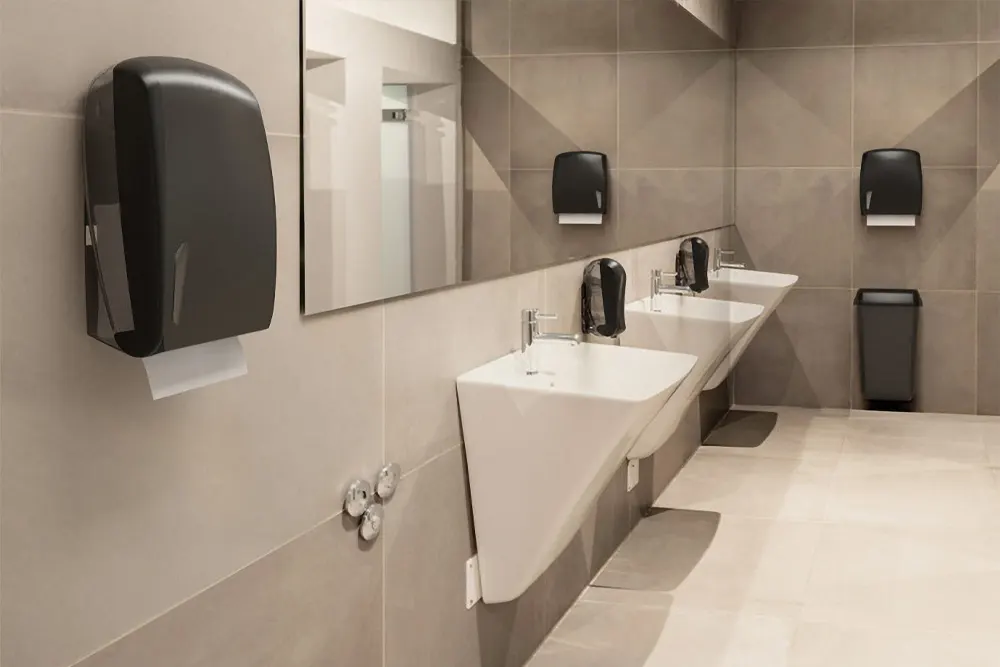
Shopping malls are characterized by extremely high foot traffic and constant pressure on infrastructure.
In such an environment, hygiene systems must not be merely functional – they must be engineered for “heavy-duty” durability without losing visual appeal.
If you want a deeper understanding of how hygiene systems, paper products, and consumption control function across different industries, read this text Dispensers and paper products to the end, where all principles and solutions are explained in detail. Also explore our other texts directly related to this blog or other blogs and discover a wealth of useful information regarding dispensers, paper products, and other consumables compatible with your industry and facility.
This text is part of a broader system of guides that address specific challenges of different industries and ways to optimize them.
Shopping malls as complex high-load systems
Shopping malls operate as closed systems with a large number of users who share the same resources within a short period of time.
Hygiene systems in this environment must ensure continuity, speed, and reliability – regardless of load.
Dispensers and paper products in shopping malls are integrated systems of equipment and procedures that ensure a stable level of hygiene, consumption control, and efficient flow of a large number of users.
Operational efficiency as a key factor
The key term in managing hygiene in shopping malls is operational efficiency.
High-capacity systems, such as:
- jumbo rolls
- large-volume soap reservoirs
enable a reduction in the need for frequent staff interventions, which is especially important during weekend crowds and seasonal sales.
Every minute that a dispenser is empty in a shopping mall affects the experience of hundreds of users. That speaks about the brand.
Flow speed and user experience
Flow speed is one of the most important factors in restroom organization.
Dispensers must be designed so that:
- the user spends minimal time in the space
- receives maximum functionality without delays
Ease of paper dispensing and fast soap dosing directly impact:
- reduced congestion
- better flow through the space
- a positive user experience
Hygiene and dwell time
Hygiene in shopping malls directly affects so-called dwell time – how long visitors remain in the facility.
A clean, functional, and pleasant space enables users to:
- refresh themselves
- continue shopping
- spend more time in the mall
On the other hand, poor hygiene encourages earlier departure and leaves a negative impression.
A systematic approach as a standard
An efficient hygiene system in shopping malls includes:
- high-capacity equipment
- controlled dispensing
- compatibility of all system elements
This includes:
- paper products
- soap dispensers
- high-capacity dispensers
When all elements are aligned, the system operates stably and without interruption, even under maximum load.
Case example
In high-traffic facilities, the same issues often occur:
- empty dispensers
- frequent staff interventions
- untidy restrooms
After implementing systems with higher capacity and controlled dispensing:
- consumption stabilizes
- the space remains cleaner
- staff workload decreases
A small optimization in the system = a large effect on facility operations.
Hygiene as part of strategy
In shopping malls, hygiene is not just an operational task – it is part of the strategy of space management and user experience.
Systems that ensure continuity, speed, and reliability directly impact visitor satisfaction and business efficiency.
If you are considering upgrading the hygiene system in a high-traffic facility,
contact us and find out how to implement a solution that ensures stable operation and optimal costs.
Dispensers and paper products – Healthcare
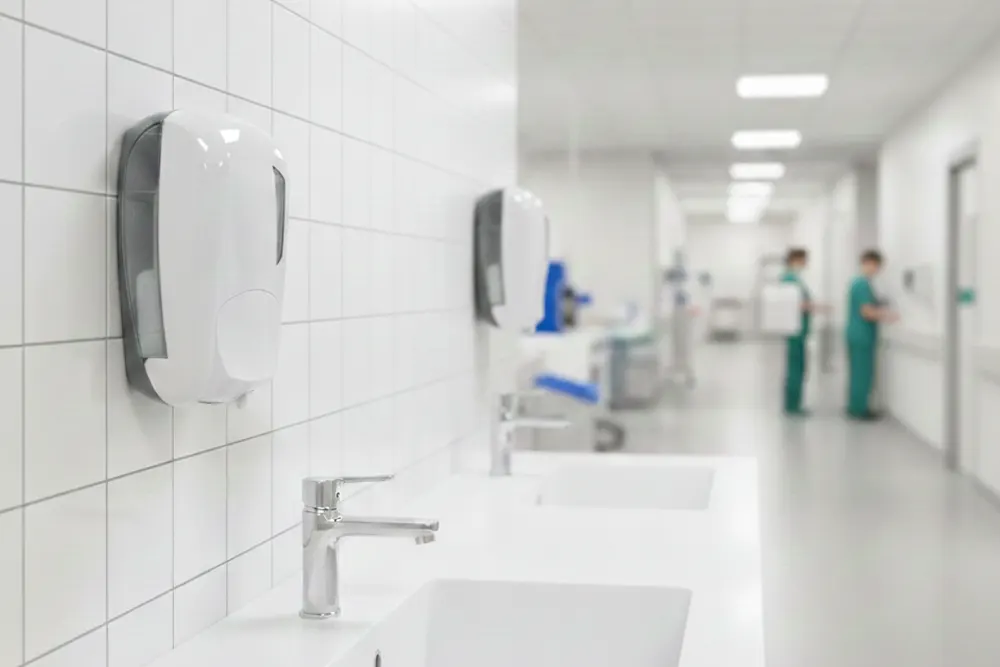
In healthcare institutions, hand hygiene is not a matter of comfort but a key factor in infection prevention and the preservation of life.
In hospitals, health centers, and laboratories, hygiene systems are not additional equipment, but part of the medical protocol for infection control. Every element must be designed with one goal: maximum safety for patients and staff.
Hygiene systems as part of the medical standard
Dispensers in healthcare function as control points for preventing the spread of pathogens. Materials must be resistant to aggressive disinfectants, with no porous surfaces where bacteria can remain. The design allows for fast and complete cleaning, without compromise.
Contactless technology as the gold standard
Touchless systems eliminate the need for physical contact, significantly reducing the risk of cross-contamination. Every time a healthcare worker or patient does not touch the surface of a dispenser, the probability of infection transmission is reduced.
Precise dosing and reliability at all times
Our solutions enable accurate dosing of antiseptic soaps and disinfectants, in accordance with strict medical protocols. In an environment where seconds matter, systems must respond instantly and without error.
Protection of healthcare workers’ skin
Healthcare professionals wash their hands up to 100 times a day. Therefore, soap formulations must be effective against pathogens while preserving the natural protective layer of the skin, preventing irritation and damage.
Reliability as the foundation of the system
In healthcare, there is no room for failures or empty dispensers. System stability directly affects patient safety and the continuity of medical staff operations.
By implementing advanced hygiene systems in healthcare institutions, not only is the standard of cleanliness improved, but human health is actively protected, the risk of hospital-acquired infections is reduced, and trust in the entire healthcare system is elevated, where every properly designed detail has the potential to make a crucial difference.
Industries
In industrial environments, hygiene systems directly impact productivity, employee safety, and production continuity.
In manufacturing plants, workshops, and heavy industry, hygiene is not measured by aesthetics but by durability and functionality. Here, we face oils, greases, metal shavings, and aggressive chemicals, which require a completely different approach to hygiene systems.
Robust systems for extreme conditions
Dispensers and paper holders in industry must be resistant to impacts, moisture, and temperature fluctuations. Reinforced plastics and stainless steel (inox) ensure durability even under hundreds of intensive uses during a single shift.
High-performance paper products
Industrial towels require specialized technology: high mechanical strength and superior absorbency. A worker must be able to clean hands or tools in one motion, without paper tearing. This reduces time spent away from the workstation and increases the efficiency of the production process.
Specialized soaps for heavy contaminants
Soaps in industry must deeply remove oils, greases, and chemicals, but without aggressive abrasives that damage the skin. Proper hand hygiene represents key prevention of occupational skin diseases, one of the common causes of sick leave in the industrial sector.
Hygiene as part of operational efficiency
Optimized hygiene systems reduce downtime, accelerate processes, and enable employees to focus on production. Stable supply and high-capacity systems eliminate interruptions in work and additional operational costs.
By implementing robust and reliable hygiene systems, industrial companies not only improve cleanliness but ensure production continuity, greater workforce efficiency, and long-term employee protection, turning hygiene into an invisible but essential part of a successful operation.
Case example:
A large international company operating in Serbia, Dr. Oetker , engaged us with the goal of replacing old dispenser units on the walls of production entry zones and installing new stainless steel dispensers for disinfectant, so that workers could disinfect their hands upon entering production. We also replaced dispensers in restrooms and installed new stainless steel units for liquid soap – solid, robust, and built to last. This change resulted in savings in the consumption of materials (liquid soap and disinfectant), as well as positive reactions to the modern appearance of the dispensers and additional protection, since stainless steel dispensers are significantly stronger and more durable than the previous ones. Management responded positively, and the collaboration was characterized as sustainable with mutual satisfaction.
Dispensers and paper products – Education
In schools and kindergartens, hand hygiene is not just a sanitary act – it is the first lesson in the culture of living. Educational institutions are particularly demanding ecosystems: a high number of users, frequent use, and risk of infection spread, combined with limited budgets.
System intelligence in schools
Luu redefines hygiene in education through a system-based approach. Instead of expensive dispensers that burden budgets, we introduce a free installation model (0€ investment) with contractual supply. Long-term sustainability becomes the standard, and schools move from ad-hoc procurement to efficient resource management.
Robust and intuitive systems
Our dispensers are designed for frequent use: intuitive for children, yet resistant to vandalism and unauthorized opening. The implementation of contactless technology significantly reduces the spread of seasonal viruses, resulting in fewer absences among students and staff.
Cost control and resilience
Luu dispensers and paper products prevent waste of paper and soap, reducing waste by up to 40%. Children receive premium soap that protects the skin and towels that do not tear, while management gains full control over costs. Every dispenser becomes a silent educator – a design that inspires proper use without unnecessary instructions.
Focus on education and health
Education begins the moment a child touches a well-designed dispenser. Our role is to provide infrastructure that allows the focus to remain on learning, not infections. Habits formed in schools last a lifetime, setting the standard for a clean and healthy future.
Investment in hygiene in educational institutions is not a cost – it is an investment in the health and productivity of future generations. Contactless systems and robust dispensers create a safe environment, reduce absences, and develop lasting hygiene habits. With the Luu model, schools do not merely equip restrooms – they build a culture of health and standards that carry forward, ensuring that knowledge and hygiene go hand in hand.
Sports facilities
Sports centers, gyms, and stadiums are places where the human body reaches its limits, but also where there is an increased risk of infection spread due to sweating and close contact. Hygiene in sports facilities is not a luxury – it is a synonym for professionalism and a key factor in the safety of all users.
Robust equipment for locker rooms and showers
Locker rooms and shower areas require equipment that can withstand high humidity and constant exposure to water. Our dispensers for gels and shampoos are leak-proof, easy to maintain, and prevent the buildup of mold and limescale, preserving both the aesthetics and functionality of the space.
Accessibility and hygiene during training
In training areas, the availability of paper towels and disinfectants for equipment builds user trust. An athlete who sees that hygiene is at the highest level feels more motivated and secure, while the fluid and rapid availability of equipment contributes to efficient training.
Skin protection and user health
Sports hygiene also includes protection against skin fungi and bacteria. Our soaps with specific pH values support the natural skin barrier, especially after intense training. Every detail – from water temperature to towel softness – is carefully designed to promote recovery and user safety.
By redefining standards in sports facilities, hygiene becomes the foundation of safety, motivation, and user experience. Restrooms, locker rooms, and training zones are no longer merely functional spaces, but key areas for recovery and satisfaction. With Luu systems, management gains a reliable, contactless, and robust hygiene infrastructure that enhances the reputation of the center and encourages users to return. Investment in hygiene in sports facilities is not a cost – it is an investment in health, performance, and the long-term success of your brand.
Dispensers and paper products – Transport and traffic
Airports, railway, and bus stations represent the nerve center of modern society, where hand hygiene becomes a key barrier against the spread of infections. In transit zones, the priority is absolute reliability and “bottomless” capacity capable of handling thousands of users daily.
Model for transit zones
Hygiene without interruption
Luu redefines standards in transport facilities. Instead of high capital costs for equipping large restroom complexes, we introduce a model of continuous availability.
- Zero initial costs: Free installation of professional contactless systems.
- Focus on experience: Focus on the flow of people – we take care of the resources.
- Supply security: A long-term partnership that guarantees the functionality of every restroom, at all times.
The future of transit is not in owning equipment, but in flawless service.
Anti-vandal design and sensor technology
Our solutions are designed for 24/7 operation, with vandal-proof design and sensor technology that accelerates passenger flow, reduces congestion, and enables precise dispensing of soap and towels. A particular challenge is refill logistics – Luu high-capacity systems ensure longer-lasting equipment and reduce the frequency of staff interventions.
Cost optimization and waste reduction
Passengers evaluate a facility by restroom cleanliness – the first and last impression of a city. Our systems provide:
- 0€ CapEx: complete equipment of facilities with contactless devices without initial cost.
- Maximum hygiene: reduction of cross-contamination in high-traffic spaces.
- Operational savings: “sheet by sheet” dispensing reduces waste by up to 40%.
- Smart Refill: quick check and refill in seconds, without disrupting facility operations.
With Luu, hygiene in the transport industry becomes a subtle advantage of your facility, elevating the perception of standards and safety. Transit spaces are no longer places of compromise, but examples of precision, functionality, and premium aesthetics. Investment in contactless dispensers and smart paper products directly impacts passenger satisfaction, operational efficiency, and the reputation of the facility. It is an investment that restores trust and safety to every user on the move.
Public institutions
Public institutions such as courts, municipalities, and ministries represent places where citizens exercise their rights, and where the state shows its face. Hygiene in these facilities is often neglected, sending the wrong message about the level of service and professionalism. A restroom in a public institution is not a “last priority”, but a reflection of order, stability, and respect for users.
Sustainability and cost control
Quality hygiene equipment directly impacts efficiency and budget responsibility. Systems with controlled dispensing prevent material waste, saving taxpayers’ money. Equipment must be durable, reliable, and easy to maintain, as visits to these facilities are constant and large in number.
Design that reflects authority
The design of dispensers and paper products should be classic, authoritative, and unobtrusive,
in line with the professional image of the institution. At the same time, public spaces must be inclusive. Dispensers must be easily accessible to people with disabilities and elderly citizens, with simple activation mechanisms and ergonomic positioning.
Hygiene as a bridge of trust
A clean and well-equipped restroom in the public sector is not a luxury, but a basic standard of human dignity. Through the implementation of premium hygiene, contactless dispensers, and controlled dispensing of paper and soap, the institution sends a clear message: the system works for citizens and their needs.
By implementing the Luu standard in public institutions, hygiene becomes a symbol of trust, professionalism, and responsible use of public funds. Every properly installed and functional dispenser represents a step toward more efficient administration and respect for citizens. Investment in hygiene here is not a cost. It is the foundation of dignity, order, and stability of public space.
Dispensers and paper products – Tourism
In the tourism industry, hygiene is not a secondary element – it is a key parameter by which guests evaluate the quality and value of their stay. Hotels, resorts, and apartments sell the promise of rest, and that promise collapses if bathrooms or public restrooms do not reflect impeccable cleanliness.
Personalization and experience
Our approach to tourism redefines standards through personalization and positive user experience. Dispensers, soaps, and paper products become part of the atmosphere of relaxation. In premium hotels, soap must have a subtle, luxurious fragrance that is memorable, while paper products simulate the touch of a cotton towel through their softness and strength.
Efficiency during the season
Seasonality is the main challenge in tourism. Systems must be highly efficient during peak season, with minimal need for refilling and maintenance, while off-season they must be easy to preserve and protected from moisture. In campsites and mountain lodges, priority is robustness, ecological sustainability, biodegradable paper, and soaps that do not pollute the environment.
Hygiene as an investment in reputation
Hygiene in tourism is a direct investment in reviews on platforms such as Booking.com or TripAdvisor. A guest who feels safe from a hygiene perspective is more free to enjoy other amenities. Dispensers and systematic cost control allow staff to shift focus from refilling to delivering a premium experience – and that premium experience is reflected in thorough cleaning and maintenance of rooms, bathrooms, shared areas, lobbies, and reception.
The Luu standard in tourism builds an architecture of trust, where every detail in the restroom sends a clear message: “You are safe, valued, and welcome here.” Hygiene ceases to be a mere service and becomes a key element of loyalty and destination reputation. Investment in high-quality hygiene systems does not only return through operational efficiency, but through lasting guest trust, making every stay memorable.
Events
The organization of large-scale events – from prestigious business forums to mass music festivals – represents a logistical peak in the world of hygiene. Standards are tested in real time, under enormous pressure and within short intervals. In the event industry, the focus is on three pillars: mobility, speed, and efficiency, and hygiene is a direct reflection of professionalism and organizational strength.
Professional hygiene for temporary and VIP spaces
Our collaboration model eliminates the need to purchase equipment for temporary spaces. Luu offers professional dispensers that aesthetically integrate into any architecture, from VIP lounges to open arenas. Our philosophy is clear: hygiene should be flawlessly functional and invisible, yet always ready for massive flows of people.
Luu Event logistics
- High-Flow systems: Dispensers designed to allow thousands of visitors to pass through the handwashing and drying process without creating bottlenecks.
- 0€ CapEx: Professional equipment for event spaces without burdening the organizer’s budget, through a contractual supply model of paper products and soaps.
- Foam soap: Technology that is consumed more slowly, washes faster, and reduces waste, accelerating visitor flow.
- Smart Refill monitoring: Enables staff to check system status instantly, ensuring that no visitor is left without consumables
Case example
A prestigious hotel in Novi Sad had a problem with existing cassette units that disrupted conference flow and negatively affected event ratings. After our intervention, standard units were replaced with premium Luu solutions: system operation became silent, consumption minimal, and the aesthetic appearance was perfectly integrated into the space. Client feedback was outstanding, and the visitor experience was exceptionally positive and memorable.
When a visitor sees a clean, well-supplied, and contactless-equipped restroom. They perceive it as proof of premium hospitality and organizational competence. Luu transforms hygiene from a logistical challenge into a visible advantage of the event, saving resources and enhancing the visitor experience.
Your event deserves a standard that pays for itself. Contact us for a free consumption analysis and transition to the Luu supply model
, and turn hygiene into a key competitive advantage.
FAQ – Hygiene systems in hospitality and shopping malls
- What are hygiene systems in hospitality and shopping malls?
Hygiene systems are integrated systems of equipment, materials, and procedures that ensure cleanliness, consumption control, and a high standard of hygiene in high-traffic facilities such as restaurants, hotels, and shopping malls.
- Why is hygiene in hospitality and shopping malls crucial for user experience?
The guest does not see processes, but feels the results. Clean, functional, and accessible hygiene systems increase trust, loyalty, and positive reviews, while poor hygiene negatively affects ratings and visitor dwell time.
- What are the key elements of a hygiene system in hospitality?
- Paper products: towels, toilet paper, industrial rolls
- Soap dispensers: controlled dosing, reduced consumption
- Dispensers: for paper and soap, space organization, professional appearance
- What are the key elements of a hygiene system in shopping malls?
- High-capacity systems (jumbo rolls, large soap reservoirs)
- Controlled dosing to minimize staff intervention
- Flow speed to reduce congestion
- Aesthetic and functional design that does not disrupt the visual identity of the facility
- How do hygiene systems affect costs?
An efficient system reduces material consumption (by 30–40%), lowers the need for refills and staff interventions. While a poor system increases costs and the resources required for maintenance.
- How do contactless systems affect hygiene and user experience?
Contactless dispensers reduce physical contact, increase hygiene standards and the sense of safety among guests, while also enabling more efficient control of material consumption.
- How to choose the right hygiene system for your facility?
It is necessary to consider:
- Facility capacity – high-traffic facilities require larger systems
- Controlled dosing – to reduce costs and waste
- Design and material – for durability and aesthetics When these three elements are aligned, the system functions flawlessly.
- What trends in hygiene systems can we expect in 2026–2027?
- Contactless dispensers
- Materials with controlled consumption
- Environmentally friendly and durable materials
- Design as part of brand and aesthetic identity
- How to measure the success of a hygiene system?
- Reduced material consumption
- Stable system operation and minimal staff intervention
- Positive guest reviews
- Increased visitor dwell time (shopping malls)
- What is operational efficiency in the context of hygiene systems?
Operational efficiency is a system that functions optimally with minimal staff effort, fast user flow, and stable availability of all materials, which is especially important in high-traffic facilities such as shopping malls, hotels, or gas stations.
- Why is hygiene part of the brand, and not just an operational item?
A clean, functional, and aesthetically organized space increases trust, loyalty, and brand image, while a poor system can immediately damage a facility’s reputation. Therefore, hygiene is an integral part of the brand, not just an operational item.
- What are the most common mistakes in hospitality facilities and shopping malls?
- Lack of a standardized system
- Excessive material consumption
- Inconsistent dispensers
- Frequent staff interventions
- Poor equipment quality
- How does our guide: Dispensers and paper products help optimize the system?
The master guide explains all aspects of hygiene systems in detail:
- Paper products
- Dispensers and dosing systems
- Consumption control
- Cost optimization
- Efficient maintenance strategy
- ROI explanation
Stop buying dispensers – start investing in standards.
Your facility deserves a system that pays for itself. Contact us for a free consumption analysis and find out how, with the Luu B2B model, you can reduce material costs by up to 40% with zero initial investment in equipment.
About the author
This text is not the work of a single individual, but the result of the synergy of our Luu team. Each team member who contributed to this text has between 10 and 25 years of experience in the B2B sector. We believe that top-tier standards are achieved only through the exchange of different perspectives and a shared commitment to detail. Every word and recommendation has been carefully shaped through the collaboration of authors, editors, and technical consultants working directly with clients in the field, with one goal. To provide you not only with information, but with authentic experience and knowledge you can fully trust.
Professional texts on this blog are the result of a combination of years of field experience and advanced analytical data processing, with final authorization by the authors.