
Table of Contents
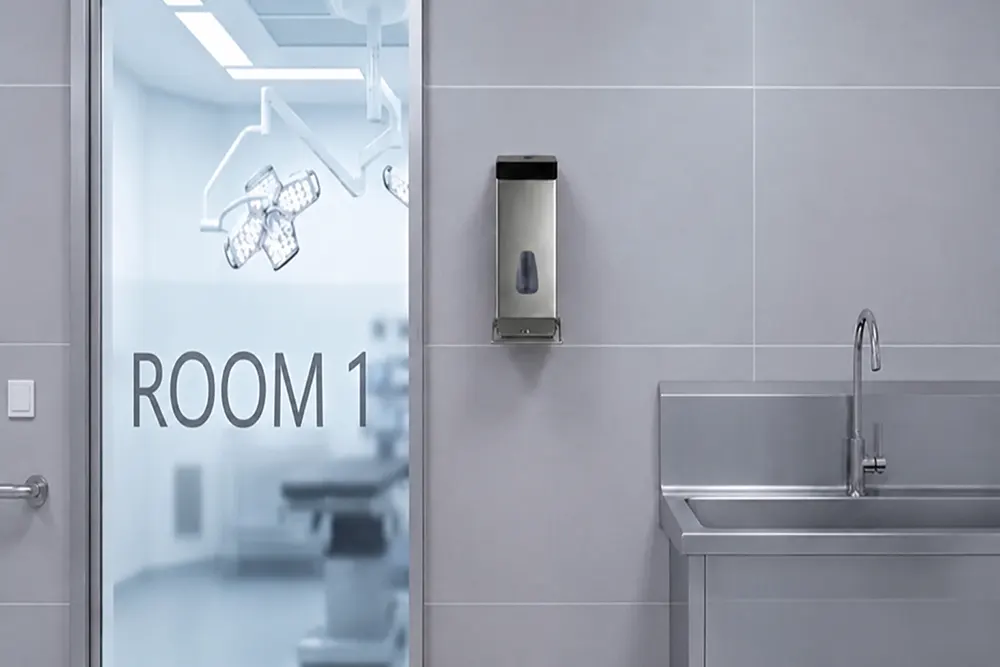
Operating room dispenser is installed in the surgical handwashing zone immediately before entering the sterile room at a height of approximately 130 cm from the floor to the activation mechanism. Contactless electronic models are mandatory because they eliminate physical contact and reduce the risk of cross-contamination.
The correct position and model selection directly affect:
- sterility
- workflow
- infection control
This approach standardizes the hygiene process and increases patient safety.
Read about how contactless electronic dispensers work on our blog: Dispensers and paper galanterie in healthcare: Hygiene standards, infection control, and savings without compromise.
Why is the position of the operating room dispenser important?
Arrange the position of the operating room dispenser to enable minimal contact and maximum control of staff movement. Proper positioning directly affects the sterility of the area and reduces the risk of contamination during preparation and work in the sterile field.
Proper dispenser positioning and strict adherence to movement zones are important for patient safety. Detailed guidelines on movement and hygiene zones can be found in the official Movement Procedure in the Operating Block of KBC “Dr Dragiša Mišović”.
Install the dispenser in the zone before entering the sterile area or immediately next to the surgical handwashing sink. This enables a logical flow of movement without crossing clean and contaminated zones.
Operating room dispenser – Installation guide:
| PROPER INSTALLATION (YES) | MUST NOT BE INSTALLED (NO) |
| Surgical handwashing zone (before entering the sterile room) | Inside the sterile field |
| Height of approximately 130 cm from the floor to the activation mechanism | Directly above the water splash zone (risk of contamination and malfunction) |
| Range of contactless activation (ergonomically accessible) | Places that require physical contact during activation |
| Position that follows a logical movement flow without crossing clean and contaminated paths | Places where staff movement crosses |
How to choose the right dispenser model for operating blocks?
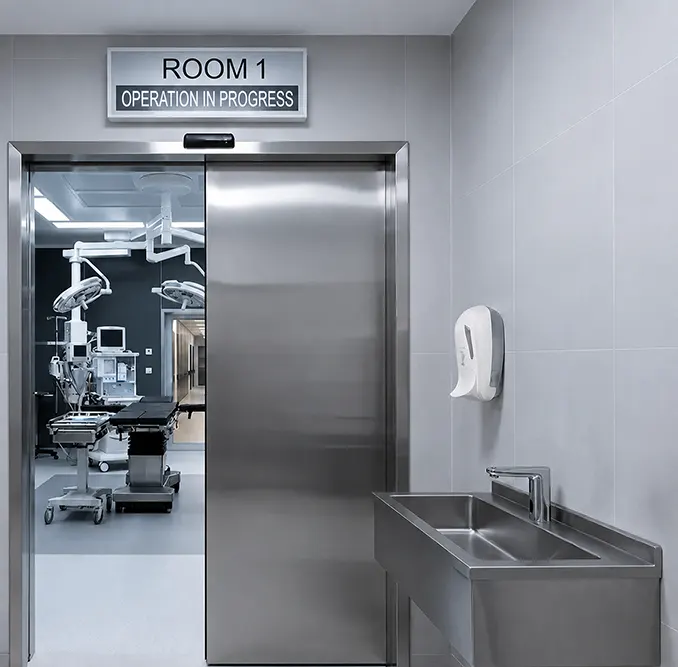
The right choice of dispenser in operating blocks is based on contactless operation, material resistance, and precise dosing. The model must enable controlled dosing without contact and without variation in the amount of product.
The most commonly recommended are:
- Contactless electronic dispensers
- Stainless steel models resistant to disinfectants
- Wall-mounted dispensers with controlled dosing
The dispenser must support hospital hygiene standards and be compatible with infection control protocols.
At what height should the operating room dispenser be installed?
Install the surgical handwashing dispenser in the operating block at a height of approximately 130 cm from the floor to the activation mechanism:
- Ergonomics: This height enables a natural hand position without unnecessary bending or lifting
- Fluid control: Proper height enables controlled fluid drainage down the forearms during preparation
- Strategic location: The device is installed in the surgical handwashing zone immediately before entering the sterile room
- Protection against contamination: It is installed close enough for activation but outside the water splash zone from the sink in order to preserve sensor functionality and prevent contamination
- Operational benefits: This positioning directly contributes to maintaining sterility, optimizing workflow, and strict infection control
How to enable regular maintenance and refilling of the operating room dispenser?
In operating blocks, an empty dispenser compromises the surgical protocol. The dispenser must provide a clear view of the consumable material inside it and eliminate the risk of contamination.
Equipment maintenance in surgery allows no mistakes, which is why the following are important:
- Fill level indicators: Transparent windows are necessary for timely refilling. LUU dispensers offer the possibility of integrating precise software that sends information about dispenser fill levels to hospital staff, reducing the need for frequent checks by hospital personnel
- Closed cartridges: Factory-sterile cartridges have an advantage over refilling from canisters
- Safety: Opening the dispenser risks the penetration of microorganisms into the product
- Efficiency: Fast cartridge replacement without contact ensures maximum sterility and continuity of the medical team’s work
Is the housing of LUU dispensers resistant to aggressive chemical agents?
In operating rooms where sterilization is rigorous, material durability is crucial. The housing of LUU dispensers must be tested for resistance to chemicals and alcohol- and chlorine-based products in order to avoid structural damage and maintain a high level of hygiene.
Cleaning operating blocks with strong disinfectants requires a specific quality of equipment that LUU dispensers meet.
- Tested resistance: Regardless of whether it is stainless steel or high-quality ABS plastic, the material must be resistant to constant contact with aggressive chemicals
- Risk with lower-quality models: Lower-quality dispensers often become discolored or crack after only one month of use due to exposure to cleaning agents
- Longevity: Choosing certified materials prevents microcracks where pathogens may remain
Which is better: a mechanical or electronic dispenser for operating blocks?
Electronic dispenser in the operating block represents the standard of modern hygiene control due to precise dosing and complete avoidance of contact.
Mechanical models still exist but carry a higher risk of uneven consumption and contamination.
| Feature | Traditional dispenser | Electronic dispenser |
| Activation method | Manual pressure | Contactless sensor |
| Dose control | Uncontrolled | Controlled dosing |
| Hygiene risk | Higher contact | Minimal contact |
| Material consumption | Higher | Savings of up to 37% |
| Suitability for operating blocks | Limited | High sterility standard |
Electronic dispensers bring stability to the process without relying on the human factor.
How does the dispenser affect infection control?
A hospital dispenser directly affects the reduction of the risk of hospital-acquired infections through controlled dosing and elimination of contact.
Minimize every touch, as it represents a potential transmission point for microorganisms in the operating environment.
Use a contactless dispenser to minimize physical contact and improve hygiene:
- Cross-contamination is reduced
- The hygiene process is standardized
- A stable handwashing protocol is ensured
This becomes especially important in highly regulated environments such as surgical blocks and intensive care units.
Practical experience: Special surgical hospital in Kruševac
At the special surgical hospital in Kruševac, the implementation of LUU dispensers demonstrated how proper installation transforms the hygiene protocol.
Install the dispensers in the surgical handwashing zone at a precise height of 130 cm from the floor to the activation mechanism, eliminating staff bending and preventing liquid from running down the forearms.
This strategic approach delivered concrete results:
- Material savings: A reduction in soap consumption according to internal measurements and disinfectant consumption of up to 37% was recorded thanks to precise dosing
- Risk reduction: The risk of cross-contamination was minimized through the elimination of physical contact. Position the dispensers 1.2 m apart so doctors can maintain a safe distance.
- Operational efficiency: Software inventory monitoring reduced the need for manual checks of dispenser fill levels
Operating room dispenser – FAQ
Which is the best dispenser for an operating block?
The best choice is a contactless electronic dispenser with precise dosing and a stainless steel housing resistant to disinfection.
Where is the operating room dispenser installed?
Install it in the zone before entering the sterile field or place it next to the surgical sink at an easily reachable height without requiring crossing movements.
Do stainless steel dispensers have an advantage?
Yes, due to their resistance to chemicals and long-term stability in sterile conditions.
Does soap consumption decrease?
Reduce consumption by up to 37% with electronic systems thanks to controlled dosing.
Our team of experts is available for consultations, assessment of your healthcare institution’s needs, and assistance in selecting LUU dispensers that guarantee savings and the highest level of sterility.
Contact us for expert support and an offer.
Subscribe to the LUU newsletter and stay updated with the latest offers.