
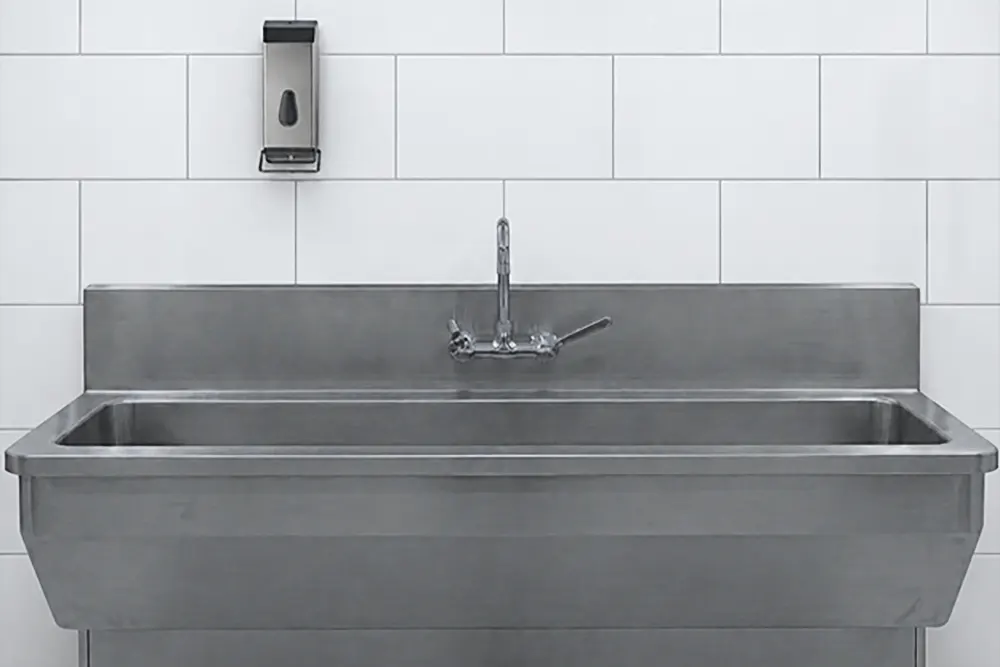
Table of Contents
In environments such as healthcare facilities where hygiene standards are measured not only by aesthetics but also by infection prevention every element of equipment is part of a smart strategy. Stainless steel toilet dispensers are the answer to the challenges of modern medicine.
Made of high-quality stainless steel these devices enable flawless dispensing with maximum protection of consumables from external contamination.
To understand why the material from which professional dispensers are made is important read in our blog: Dispensers and paper products in healthcare: hygiene standards, infection control and savings without compromise.
What are stainless steel toilet dispensers and why are they a standard in healthcare?
Stainless steel toilet dispensers are devices made of stainless steel that enable controlled dispensing of soap, towels or disinfectants with a high level of hygiene and resistance to wear.
They represent a stable solution for environments such as hospitals, clinics and other healthcare institutions where sanitary standards must be at the highest level.
In healthcare facilities the choice of material depends on operational rather than aesthetic standards.
Stainless steel (Inox) is the leading material in healthcare because it provides a combination of biocompatibility and superior hygiene. According to strict safety standards of the Australian TGA (Essential Principle 8) the non-porous structure of this material is important for eliminating biofilm and achieving 100% decontamination in sterile conditions.
Stainless steel is a unique material known for its specific characteristics:
- smooth surface to which bacteria cannot adhere
- easy to disinfect because the material does not change properties at temperatures from 121°C to 134°C which is the standard for steam sterilization
- does not react with aggressive cleaning agents
That is why stainless steel toilet dispensers have a special place in infection control they are not just part of additional equipment or an aesthetic detail.
Why is stainless steel (Inox) the gold standard in medicine?
Stainless steel (Inox) is the leading material in healthcare because it provides a unique combination of biocompatibility, extreme durability and superior hygiene. Unlike other materials it effectively contributes to infection control thanks to the following characteristics:
- Bacteriostatic surface: Its non-porous ultra-smooth texture prevents microorganisms from forming biofilm (bacterial colonies) which facilitates 100% decontamination.
- Chemical inertness: The material does not react with tissues nor with aggressive medical disinfectants based on chlorine and alcohol and maintains integrity for decades.
- Resistance to sterilization: It withstands extreme temperatures (autoclaving) and UV radiation without changes in physical properties or the appearance of microcracks that could become sources of infection.
The introduction of stainless steel toilet dispensers in premium healthcare facilities is a strategic decision that minimizes the risk of cross-contamination and significantly extends the lifespan of equipment.
Why do LUU stainless steel toilet dispensers reduce the risk of contamination?
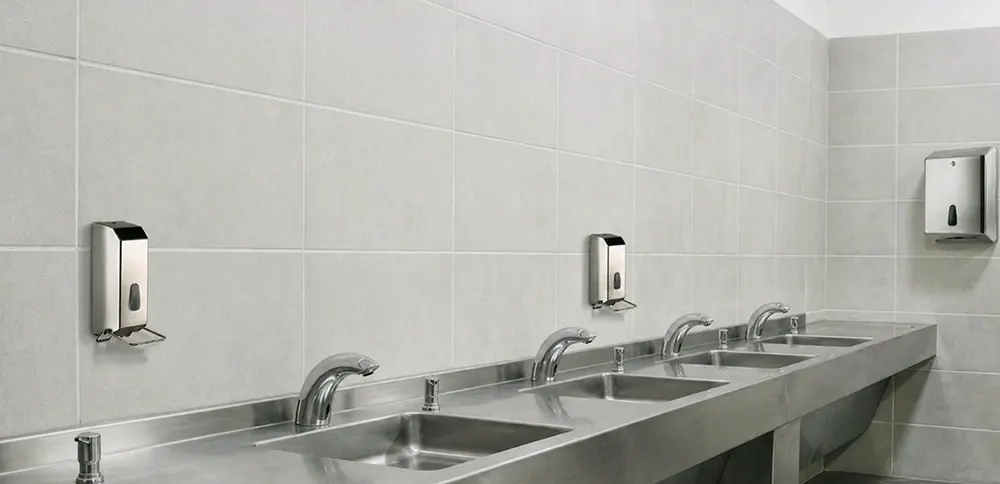
Stainless steel dispensers for toilets in healthcare reduce contamination because they have a smooth non-porous surface of brushed stainless steel that does not retain microorganisms and allows quick and efficient cleaning.
In combination with touchless mechanisms they additionally eliminate the need for physical contact.
In practice every touchpoint represents a potential risk. Traditional dispensers often require multiple presses. This increases contact and the spread of bacteria.
With modern solutions dispensing is controlled. One motion. One dose. No retention.
What distinguishes stainless steel from other dispensers?
Stainless steel toilet dispensers differ from traditional ones in resistance, hygienic characteristics (easier maintenance) and durability which makes them more suitable for professional environments such as hospitals and clinics as well as public and private spaces with high traffic.
Comparative overview: LUU stainless steel dispensers vs traditional dispensers
| Characteristic | Stainless steel dispensers | Traditional dispensers |
| Material | Brushed stainless steel (corrosion resistant) | Standard plastic (yellows and cracks over time) |
| Hygienic design | Rounded profiles without dead corners | Sharp edges where bacteria accumulate |
| Resistance | Immune to aggressive chemical agents | Chemicals can damage the surface layer |
| Longevity | Anti-vandal housing resistant to impact | Structure prone to breaking |
| Security | Metal lock and universal key | Plastic locks that are easily broken |
How do stainless steel toilet dispensers support compliance with strictly defined sanitary standards?
Stainless steel dispensers enable standardization of hygiene in high-risk environments through three key aspects:
- hygienic design made of non-porous steel prevents biofilm formation and facilitates sterilization
- innovations such as elbow-operated levers ensure touchless disinfection necessary for surgical blocks
- superior resistance to aggressive chemicals guarantees that the material will not become porous thereby preserving the validation of the facility’s sanitary status in the long term and preventing cross-contamination
Investment in stainless steel systems ensures maximum biological safety.
Analysis of compliance of LUU stainless steel dispensers with healthcare standards
This table shows how specific technical characteristics of each model directly address the requirements of medical standards.
| Dispenser model | Main function | Healthcare benefit |
| Stainless steel with elbow lever | Activation without hand contact | Prevents transmission of pathogens in sterile zones. |
| Stainless steel dispenser for toilet paper in roll – Maxi jumbo | Closed hygienic housing | Prevents contamination of paper by aerosols. |
| Stainless steel dispenser for towels (450 sheets) | Sheet-by-sheet dispensing | The user touches only their own towel. |
| Common to all | Smooth material without microcracks | Resistance to aggressive hospital chemicals. |
Experience from practice: Modernization of protocols in a cardiovascular clinic in Dedinje
Within the prestigious cardiovascular clinic in Dedinje where the most complex interventional procedures are performed hygiene standards are integrated into every square meter of space. The implementation of LUU stainless steel dispensers for towels (capacity 450 sheets) has become a standard in certain zones:
Key results from practice:
- Microbiological barrier: The decisive factor in selection was the guaranteed surface roughness of Ra < 0.8 μm. Such a low value means that the surface of the dispenser is microscopically so smooth that bacteria have no foothold for adhesion thereby minimizing the risk of biofilm formation.
- Absolute decontamination: The medical staff of the clinic in Dedinje use aggressive disinfectants for rapid sterilization of surfaces between examinations. Stainless steel toilet dispensers retain their non-porous structure even after thousands of wipe-downs ensuring that the device does not become a source of cross-contamination.
FAQ
Are stainless steel toilet dispensers more expensive than plastic ones? The initial price may be higher but the total costs are lower due to durability and lower material consumption.
Are they suitable for all types of healthcare facilities?
Yes. They are used in hospitals, clinics, laboratories and private practices.
How demanding are they to maintain?
Minimal. The surface allows quick cleaning without special procedures.
Do they support touchless operation?
Yes many models come with sensors that further reduce contact.
Upgrade your clinic’s sanitary protocol with solutions that do not compromise safety. Contact us for specifications and model offers.
Subscribe to the LUU newsletter and stay up to date with the latest offers.