
Table of Contents
When the time comes to equip a dental clinic, every decision affects patient safety and the efficiency of the team’s work. Dental clinic dispensers and paper products are based on a combination of hygiene protocols, appropriate equipment selection, and control of daily procedures in order to ensure stable and predictable operation without the risk of contamination of contact surfaces and medical inventory. Read more about hygiene standards and consumables that are essential for your dental clinic, as well as for all other healthcare institutions, in our blog: Dispensers and paper products in healthcare: hygiene standards, infection control, and savings without compromise
What do dental clinic dispensers and paper products include?
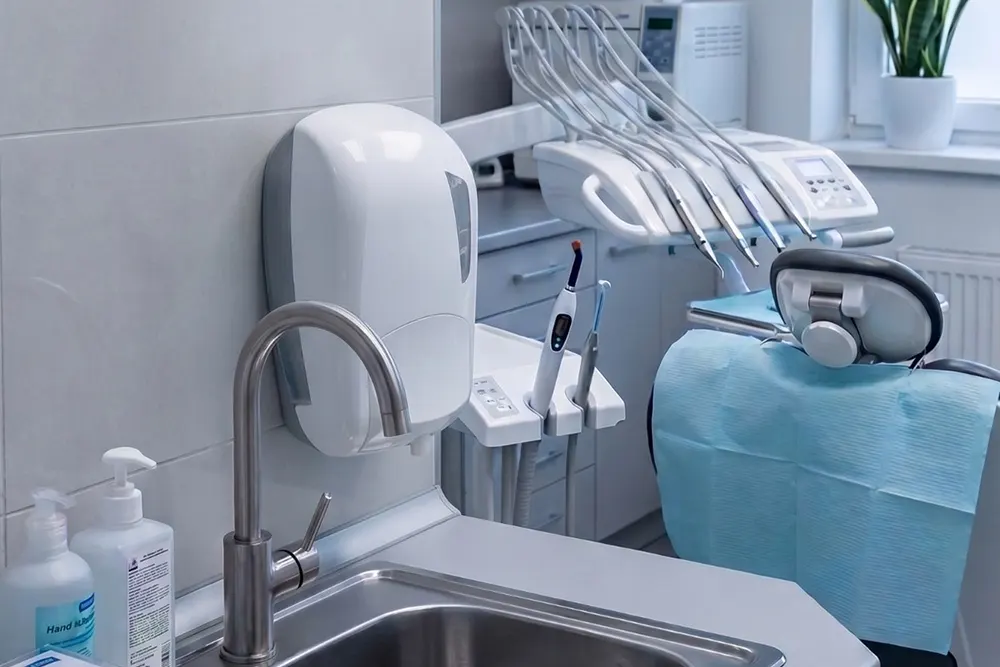
Dental clinic dispensers and paper products include the organization of medical equipment, hygiene systems, and work zones that together enable safe and standardized work without the risk of contamination.
In addition to medical devices, air and surface management is also important. Due to the creation of aerosols during procedures, equipping also подразumeva strategic placement of touchless dispensers that are always within reach and do not require hand contact.
Why are hygiene protocols important in dentistry?
Hygiene protocols in dentistry are the absolute foundation of safe clinical practice. Their primary role is to create a continuous chain of protection that prevents the transmission of pathogens between patients, dentists, and supporting staff through strictly defined procedures of disinfection, sterilization, and waste management:
- Aerosol control: Effectively neutralizes microorganisms that spread through water mist (aerosols) during the operation of turbines and cavitrons
- Elimination of cross-contamination: Standardized procedures ensure that every contact point, from the chair to the dispenser, remains safe for the next user
- Regulatory compliance: Directly meets the standards prescribed by the Rulebook on detailed conditions for performing healthcare activities, which is a prerequisite for the operation of any clinic
- Protection of team health: The risk of occupational diseases and infections among dental staff is reduced to a minimum
- Patient trust: Transparent implementation of protocols (such as the use of touchless dispensers) builds an image of professionalism and top-level patient care
What equipment is necessary for a functional clinic?
The functionality of a dental clinic is based on the integration of medical devices and auxiliary hygiene systems that together ensure continuity of work and zero risk of infection. According to professional standards, equipment is divided into operational units and systems that support a sterile environment.
Essential equipment for a dental clinic includes:
- Dental chair
- Sterilization devices
- Disinfection systems
- Auxiliary equipment that enables continuous operation without interruption and without the risk of contamination
- Autoclave for sterilization
- Ultrasonic cleaner
- Dispensers for soap and disinfection
- Medical waste systems for protecting work surfaces from aerosols
- Silent hand disinfection systems (for maintaining a pleasant noise-free atmosphere)
How do LUU dispensers and disinfection systems affect safety?
LUU dispensers and disinfection systems affect safety by enabling calibrated, touchless, and standardized application of hygiene agents, thereby directly reducing the risk of cross-contamination in dental clinics.
Disinfection systems enable:
- Precise dosing
- Continuous availability of the agent
- Reduction of human error
How do LUU dispensers solve problems in dental practice?
| Specific problem in the clinic | LUU Solution (Feature) | Benefit for the dentist |
| High risk of cross-contamination due to aerosols and hand contact. | Touchless dispensing (IR sensors or elbow mechanism). | Complete elimination of contact: hands remain sterile before and after the procedure. |
| Variable consumption and frequent spilling of agents on the floor/table. | Controlled dosing (calibrated amount of 0.65ml to 1ml). | Cost reduction of up to 37% and maintaining a clean workspace without stains. |
| Equipment damage due to aggressive disinfectants. | ABS and MABS plastic (medical-grade material). | Chemical resistance: LUU dispenser does not fade or crack after frequent cleaning. |
| Time loss when checking soap levels during patient turnover. | Transparent inspection window (visual check). | Quick insight into liquid levels without opening the device and interrupting work. |
| Safety and hygiene of reservoirs in public areas (waiting rooms). | Locking system (key or click mechanism). | Prevention of misuse, theft of agents, or contamination of the reservoir contents. |
How to reduce costs without compromise?
Cost optimization in a dental clinic is achieved through standardization of consumption, where smart systems transform variable costs into fixed ones. By choosing reliable equipment, operational losses are reduced, ensuring long-term stability without compromising hygiene standards.
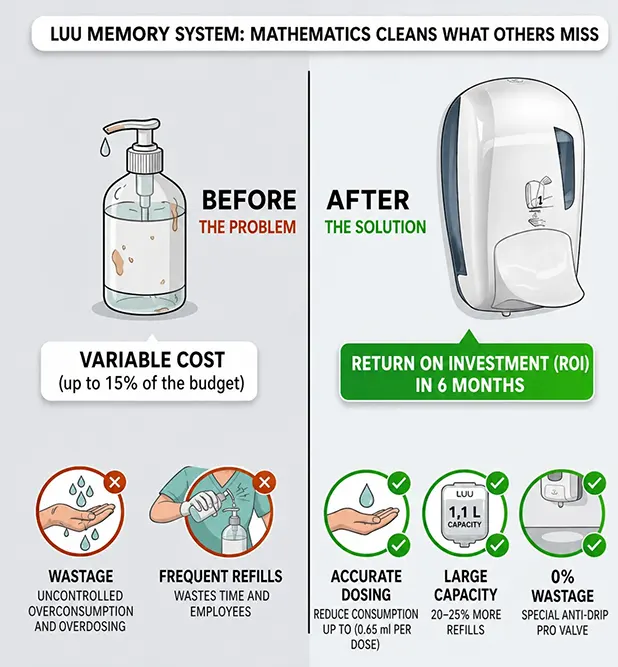
Uncontrolled consumption is a hidden cost that can burden the budget by up to 15% more than planned.
Smart LUU systems enable:
- Consumption reduction of up to 37%: Precisely calibrated dosing of 0.65 ml eliminates excessive use of agents, which in clinics with high patient frequency brings significant monthly savings
- Accurate inventory planning: With a capacity of 1.1 l, the number of refills is reduced by 20–25%, enabling quarterly logistics planning
- 0% spillage: Special valves prevent dripping onto floors, saving resources and eliminating the need for additional surface cleaning
- Staff efficiency: Thanks to visual control, the time required for checking and servicing dispensers is reduced to under 10 seconds, giving assistants more time to work with patients.
The result is a predictable system in which the return on investment (ROI) is visible after the first 6 months of use.
Dental clinic dispensers and paper products – practical experience:
When equipping the dental clinic Prosmile from Novi Sad, our focus was on zero contact. By installing touchless disinfection dispensers directly next to the dentist’s workstation, we enabled assistants to perform hand disinfection without contaminating other materials near the dental chair, which accelerated patient turnover by 15%.
Dental clinic dispensers and paper products – FAQ
How often should instruments be sterilized? After each patient, in accordance with applicable medical protocols.
Why is an elbow mechanism better than manual pressing in dentistry?
Because dentists’ hands are often in gloves with residues of materials or biological waste. Activation with the elbow ensures that the device itself remains sterile throughout the entire working day.
Are automatic dispensers necessary?
They are recommended as they reduce contact and increase the level of hygiene safety.
What is the minimum equipment required to start working?
A dental chair, autoclave, basic instruments, and disinfection systems.
How to reduce costs without compromising standards?
Through controlled consumption and the selection of systems that standardize processes.
Our solutions come with full technical support and a warranty on the mechanism, allowing you to focus exclusively on your patients’ smiles.
If you would like us to provide a free assessment and useful advice for your clinic, contact us for consultation.
Subscribe to the LUU newsletter and stay up to date with the latest offers.